
Founded in Minneapolis in 2015, TEN x TEN is a women-owned transdisciplinary landscape architecture and urban design practice grounded by a shared curiosity and passion for experimentation, storytelling, and agency. Our team of 12 collaborates with visionary clients to co-create immersive, just landscapes that adapt to social, economic, and environmental transformation.
Capitalizing on creative alliances between fields, we operate comfortably within a shifting set of disciplinary boundaries. We listen, communicate and trust, cultivating a design process full of community and laughter.
Our work pays careful attention to craft, beauty, and temporality inherent in any landscape. Merging art and science, our process challenges norms of the landscape architecture profession. We ask: What do we see? How can we document, investigate and experiment to build relationships and deepen our ways of knowing? How can we apply various modes of seeing and making to discover the magic latent in a site? Our studies document change: mold, decay, growth, competition, failure, and resilience. We explore spaces, stories, materials, and ecologies at all scales, and elevate the everyday human experience through a deep respect for the authenticity of people, culture, and ecology.
Key Team Members
Maura Rockcastle, PLA, ASLA
Principal + Co-Founder
Ross Altheimer, PLA, ASLA, FAAR
Principal + Co-Founder

MASARY Studios is an interdisciplinary art and design practice creating immersive public artworks that reveal the invisible systems connecting people, place, and the environment. Working across sculpture, sound, light, architecture, and responsive technologies, the studio creates site-specific installations that transform complex ecological, cultural, and infrastructural relationships into shared sensory experiences.
Each project begins with deep engagement—with a site’s history, landscape, communities, and rhythms. Rather than imposing a singular narrative, MASARY develops artworks that emerge from the unique conditions of a place, translating its underlying patterns into experiences that invite curiosity, participation, and reflection. Light, sound, movement, and material become tools for exploring how environments shape perception and how people connect to one another through shared space.
Founded in Boston in 2015 by Ryan Edwards and Sam Okerstrom-Lang, MASARY Studios brings together artists, designers, composers, architects, engineers, fabricators, and community partners through a highly collaborative process. The studio’s work spans permanent public art, immersive installations, and civic spaces, integrating artistic vision with technical innovation to create works that evolve with time, perspective, and public interaction.
At the heart of MASARY’s practice is the belief that public art can deepen our understanding of the places we inhabit. By making complex systems tangible through experience, the studio creates artworks that foster connection—to landscape, to community, and to the unseen relationships that shape everyday life.
Key Team Members
Ryan Edwards
Principal
Masary

Caleb Hawkins
Design Director
Masary

LaBella Associates is a full-service engineering firm, headquartered in Rochester, NY. At LaBella, our job is to create structures, plans, ideas, and results. We are driven by creating true partnerships between our team and our clients. Reliability, accountability, collaboration, and respect are not just values at LaBella-they define how we work. Since our founding in 1978, this culture of partnership has shaped the way we deliver projects: with the talent, resources, and commitment to execute complex work on time, on budget, and beyond expectations. Since establishing our Syracuse office in 2014, LaBella has built strong connections throughout Central New York and a deep understanding of the Syracuse community, its history, and its evolving civic landscape. This local perspective strengthens our ability to create thoughtful, community-centered solutions. LaBella’s expertise spans Buildings, Energy, Infrastructure, and Environmental services
Key Team Members
Matthew McCarty
Senior Structural Engineer

Michael M. Flanagan
Senior Civil Engineer | Vice President
Excerpts from Letter of Intent
“We embrace a reciprocal relationship with nature rooted in interconnectedness, resilience, and wonder. Syracuse is shaped by temperate broadleaf forests, hardwood swamps, old-growth forests, calcareous fens, sensitive habitats driven by post-industrial landscapes, and large bodies of water. This ground holds the truths and myths of its many inhabitants, the Haudenosaunee system of participatory democracy alongside colonial ambitions, Rome and Siracusa, salt, siege, and water.”
“We would incorporate community input by moving at the speed of trust, recognizing that meaningful collaboration takes time. Our approach prioritizes deep listening, transparency, and community weaving to support long-term resilience. Through our work on contested sites such as George Floyd Square, we have learned that transformation emerges through sustained relationship-building and a willingness to remain present through complexity.”
“We do not see conflict as an obstacle, but as an opportunity to listen more deeply, acknowledge past harms, and uncover shared purpose. While the material and spatial outcomes of this project will emerge through collaboration, our commitment to listening with openness and care will guide every stage of decision-making. Individually and collectively, our team is recognized for thoughtful work on culturally significant urban sites with layered and traumatic histories. These experiences have taught us to remain adaptable, humble, and responsive while gently holding multiple perspectives. We support our clients not only as designers, artists, and engineers, but also as thought partners and allies. Preparing this proposal has been deeply inspiring for our team. We would be honored to bring our energy, experience, and collaborative spirit to this project.”
Previous Work Examples
Lakewood Cemetery Welcome Gardens
Minneapolis, Minnesota | 2024
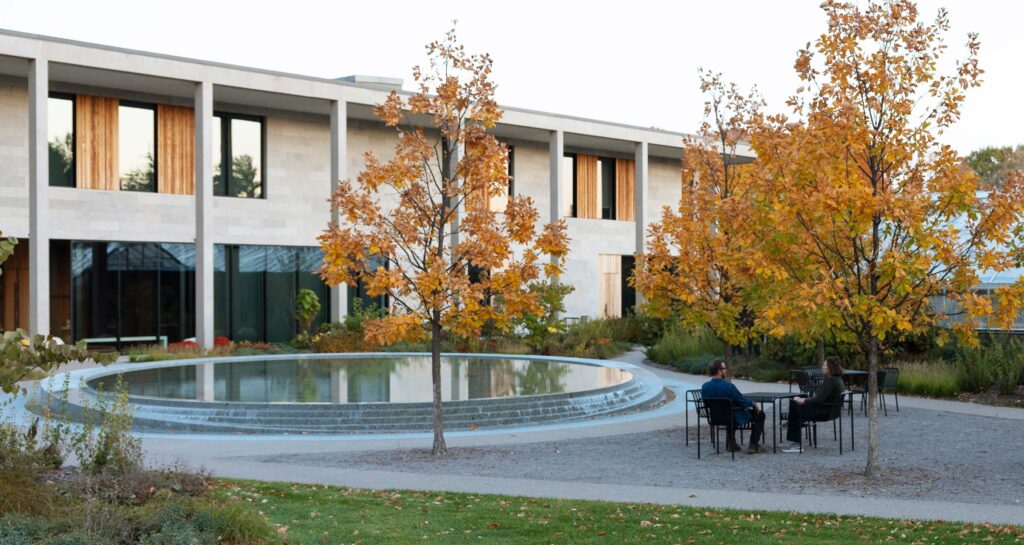
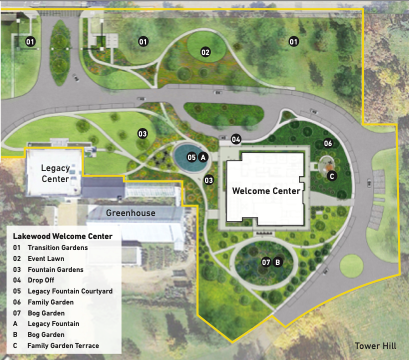
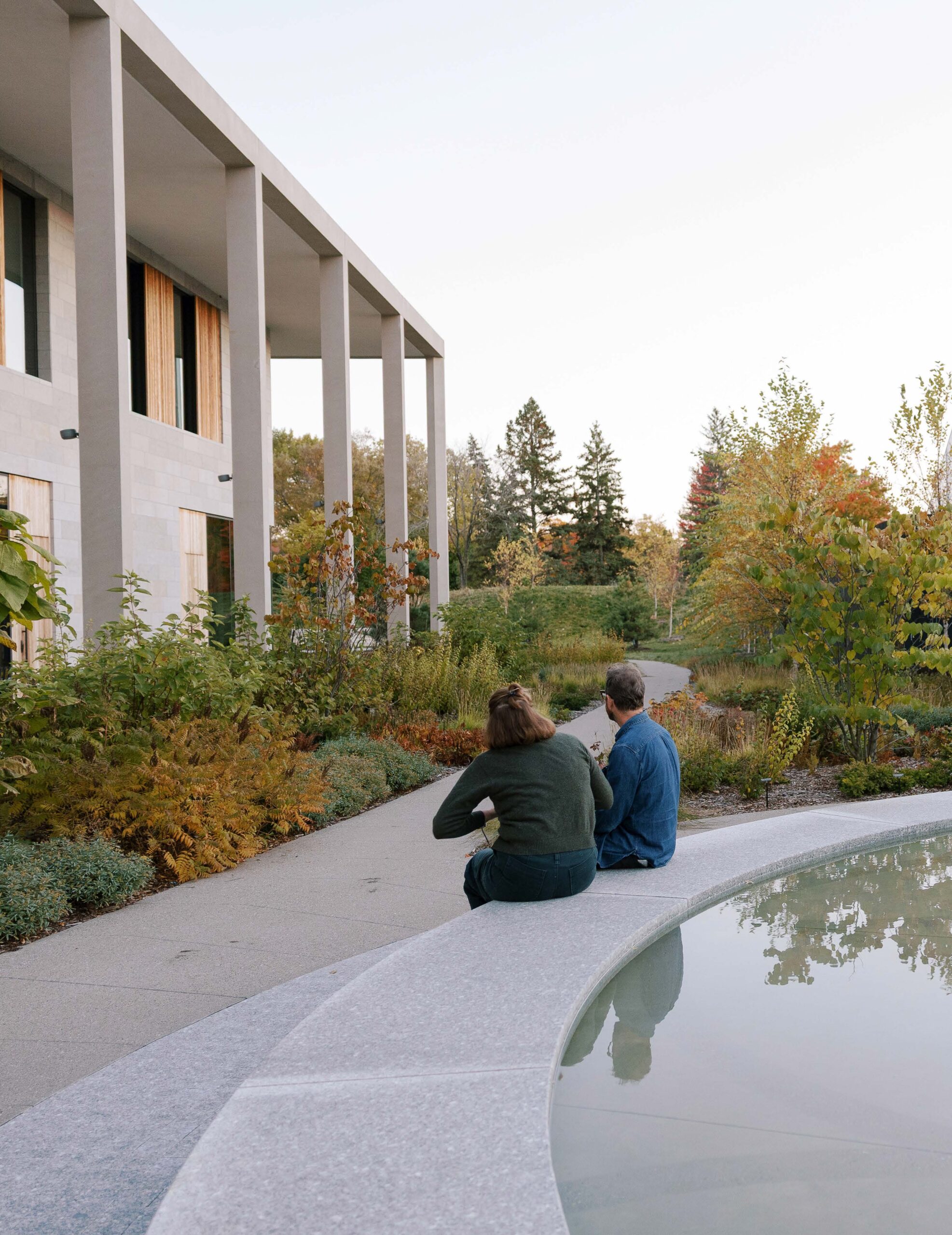
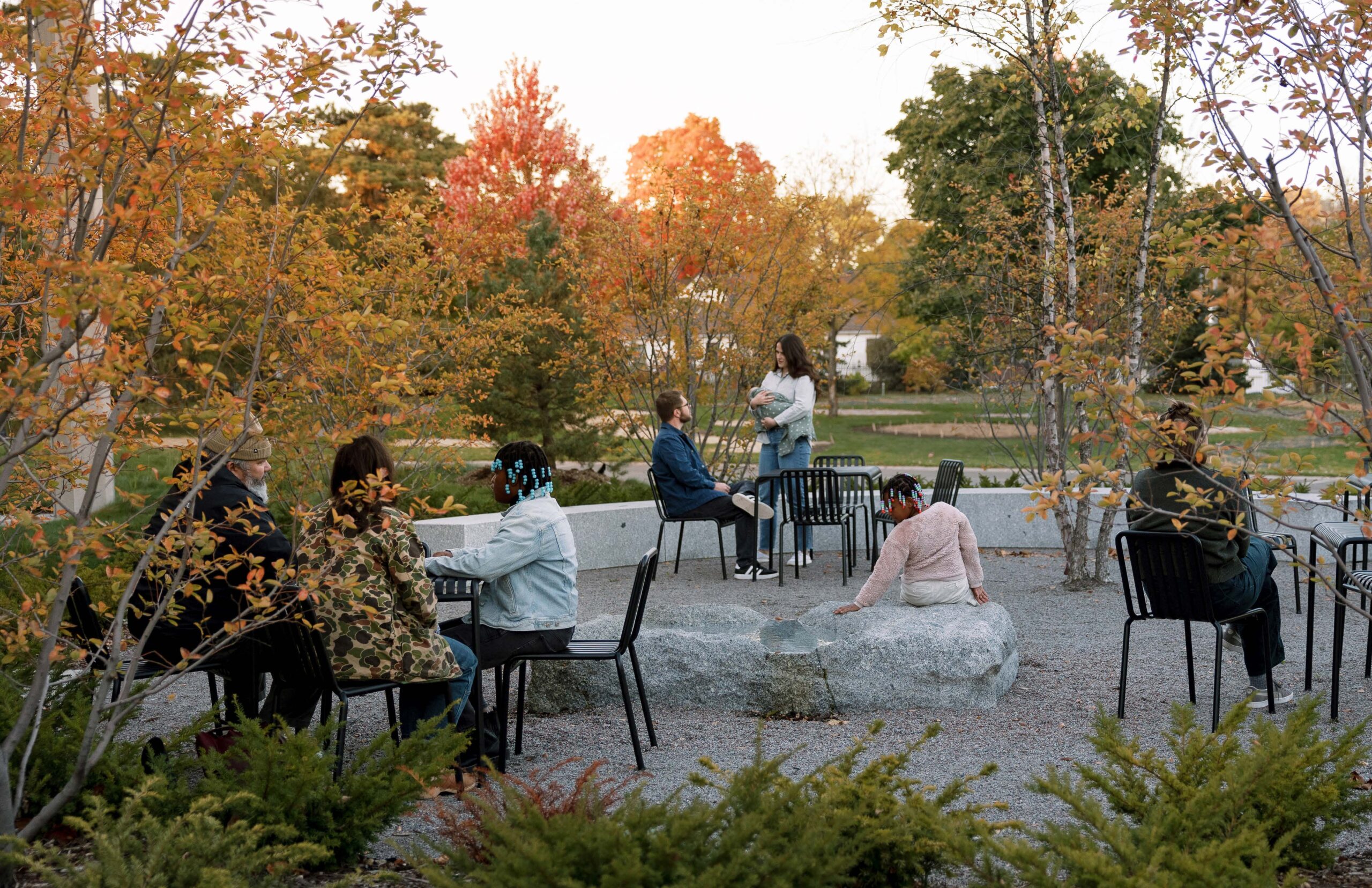
The Lakewood Welcome Gardens reimagine liminal ground as inclusive cultural infrastructure rooted in care and collective belonging. Located in historic Lakewood in between city and cemetery, the seven-acre project establishes a framework for future growth, while transforming a former maintenance area into an immersive series of gardens. The design regrounds Lakewood in the garden, restoring lost layers of ecology and meaning. Through expanded sensory experience and spaces of abundance for humans and nonhumans, the project reconnects people to the site’s history, water, and evolving rituals, welcoming all into a shared landscape of reflection and community.
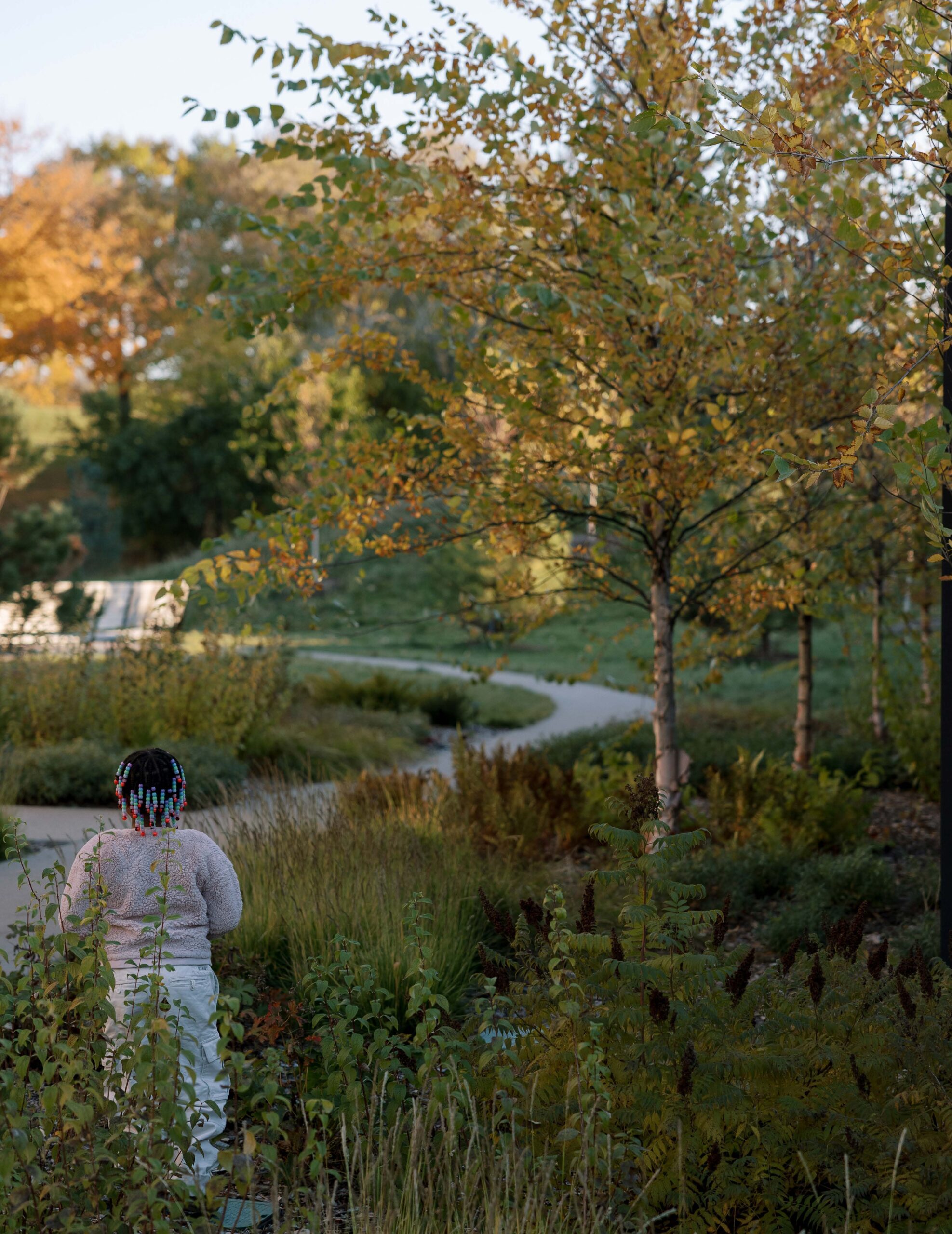
The project recenters the garden through new plant layers and lost ecologies. The plan prioritizes movement and pause through accessible paths and spaces. The design weaves circulation and water gardens into experiences that reconnect visitors to Lakewood’s identity. The site features native and adaptive, local and regional plants, and educates visitors about ecoystems and native plant use. The planting allows for human and non-human interactions, a signature experience at Lakewood.
Four experiential and materially rich garden zones define the Welcome Garden District. The Transition Gardens draw visitors from the city through dense perennial landscapes. The Fountain Gardens reorient and welcome visitors with a cascading stone water feature The Bog Garden restores a wetland ecology and captures roof runoff. The Family Garden provides a restorative setting for reflection, and respite.
Historic Fort Snelling at Bdote
Minneapolis, Minnesota | 2022
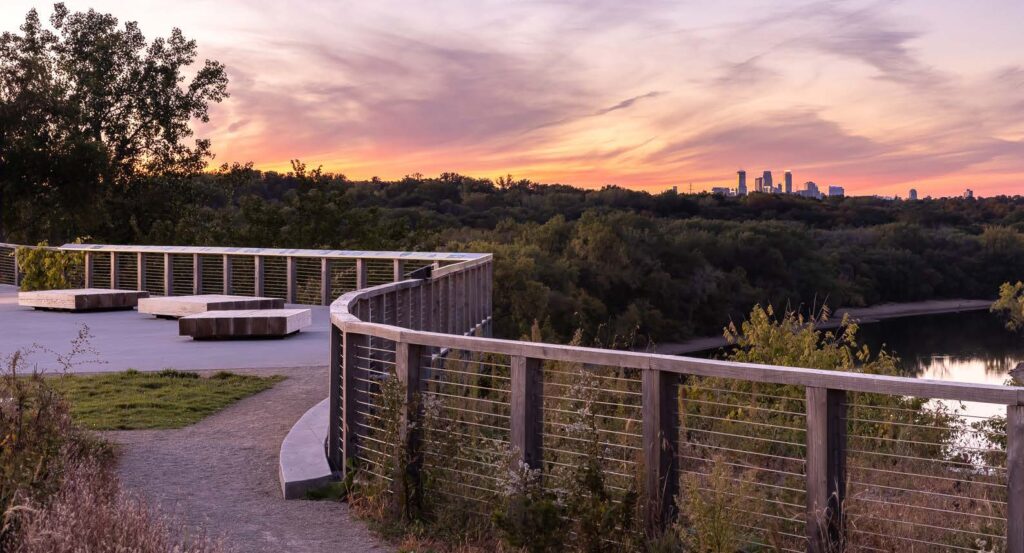
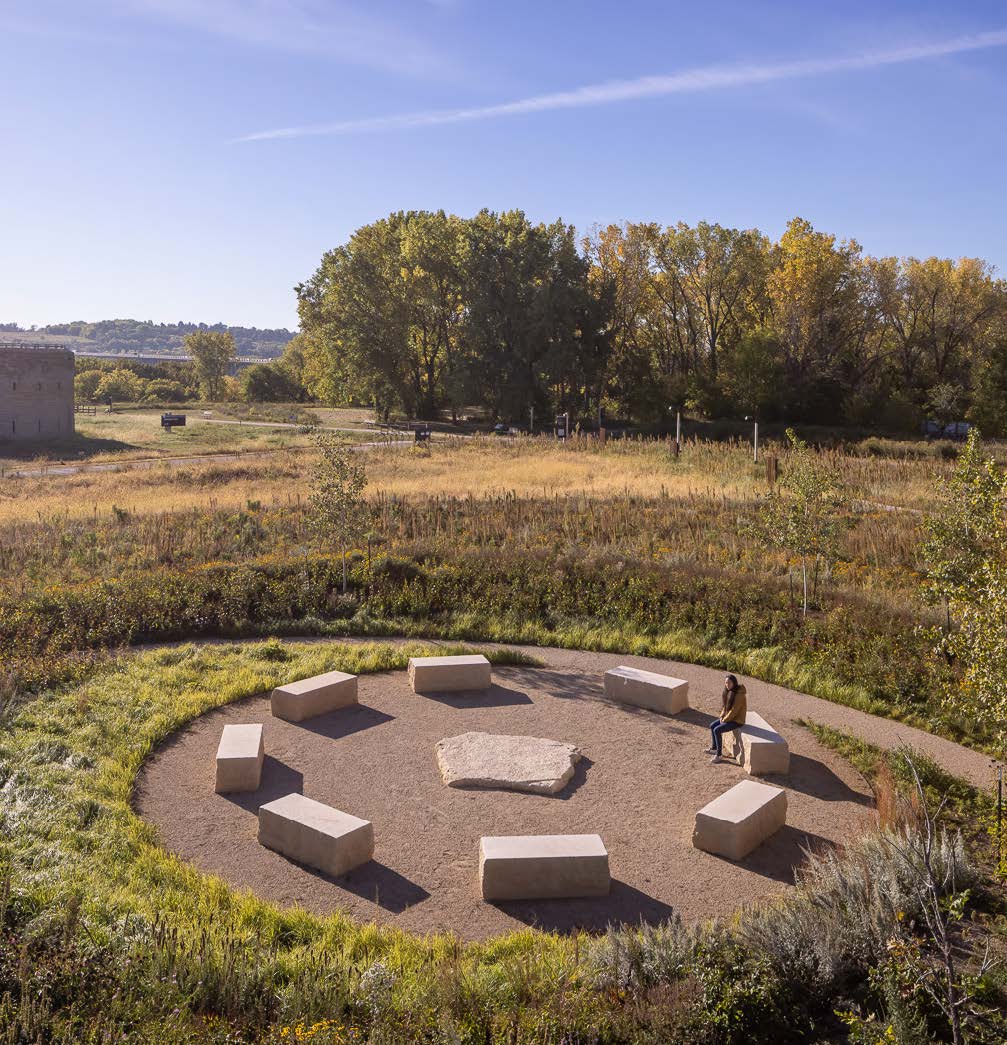
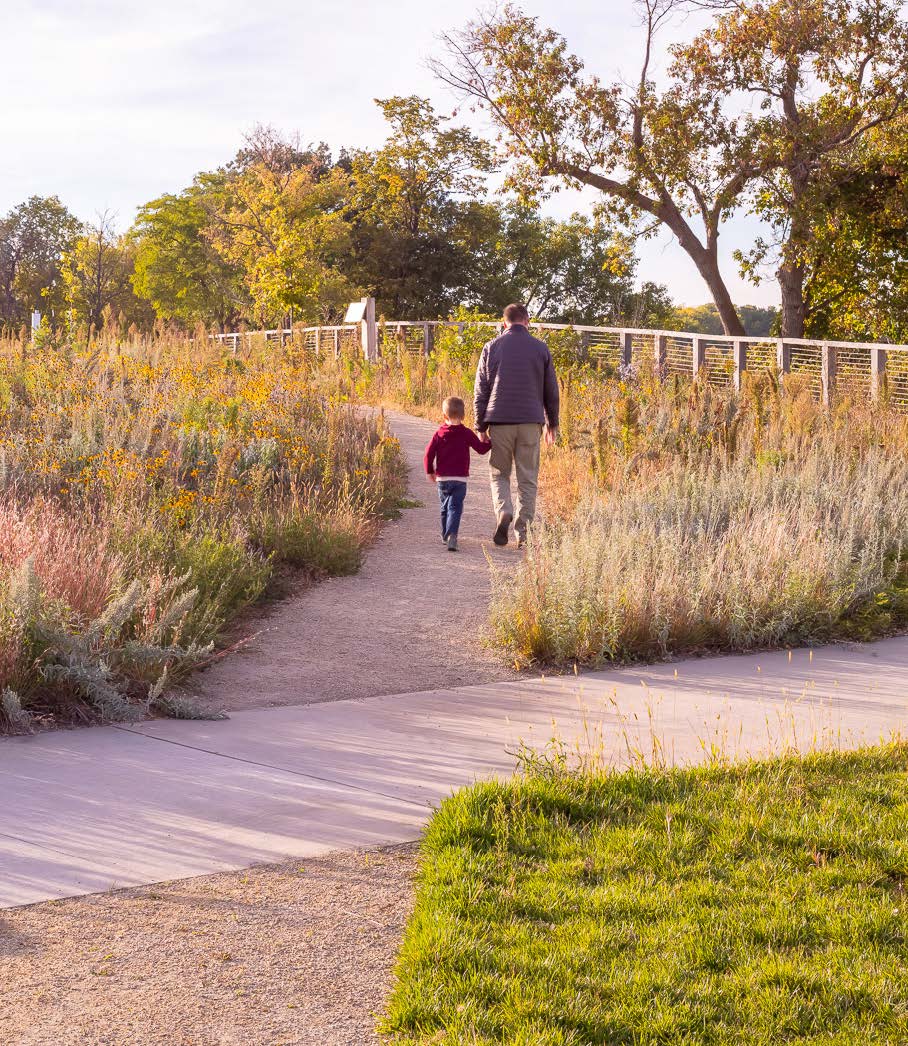
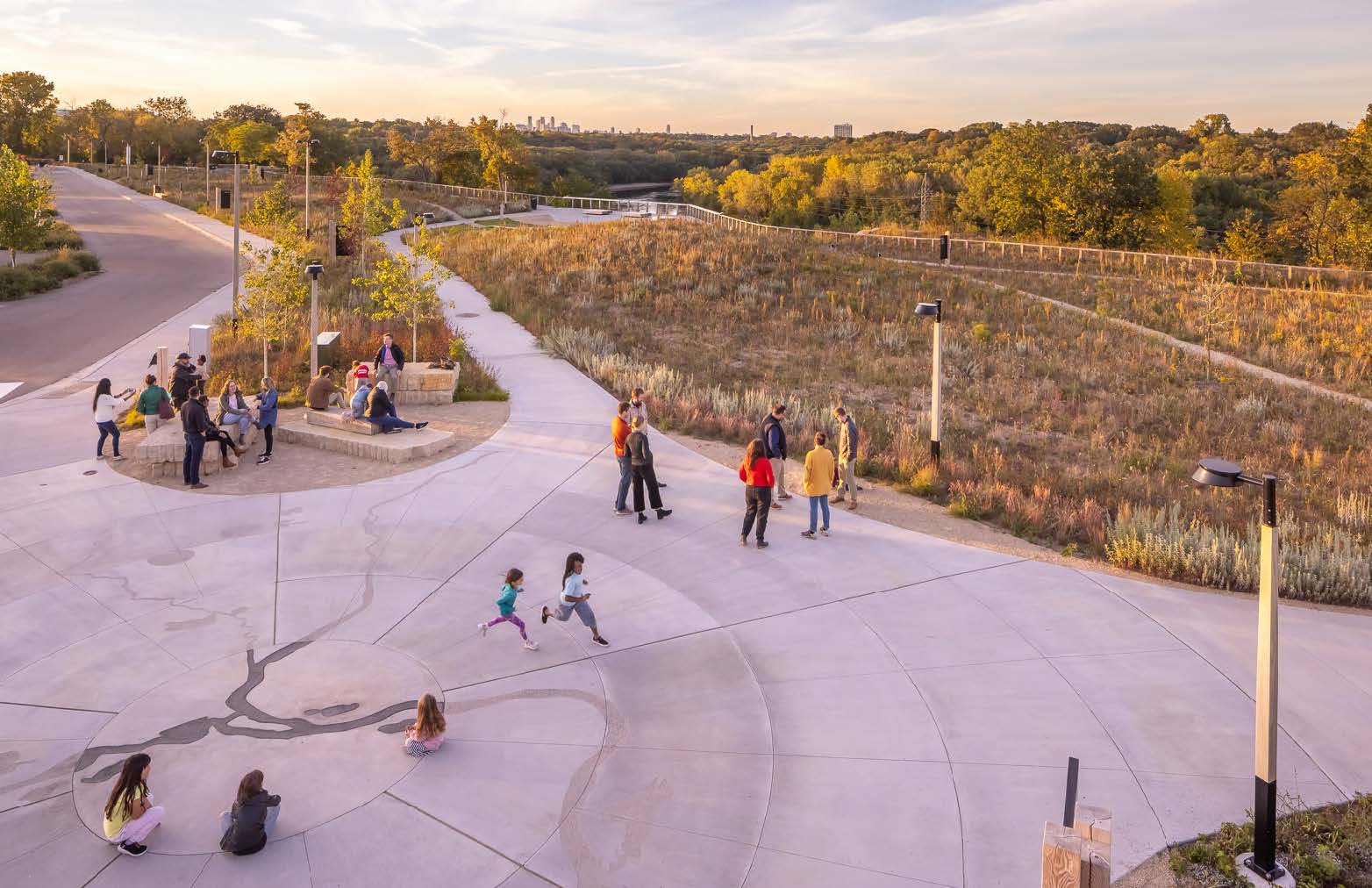
About Historic Fort Snelling at Bdote: Dakota elders tell of the creation of humans occurring in our homeland of Mni Sota Makoce (Land Where the Waters Reflect the Clouds), but specifically at the place called Maka Cokaya Kin, or the Center of the Earth. This place is at Bdote, which means the joining or juncture of two bodies of water and in this instance refers to the area where the Minnesota River joins the Mississippi River. The Dakota have ancient and sacred relations with the Bdote landscape. Perched on the bluffs above the rivers, the site offers powerful visual connections to the rivers and provides an opportunity to convey the deep history of the site through tactile connections with the landscape.
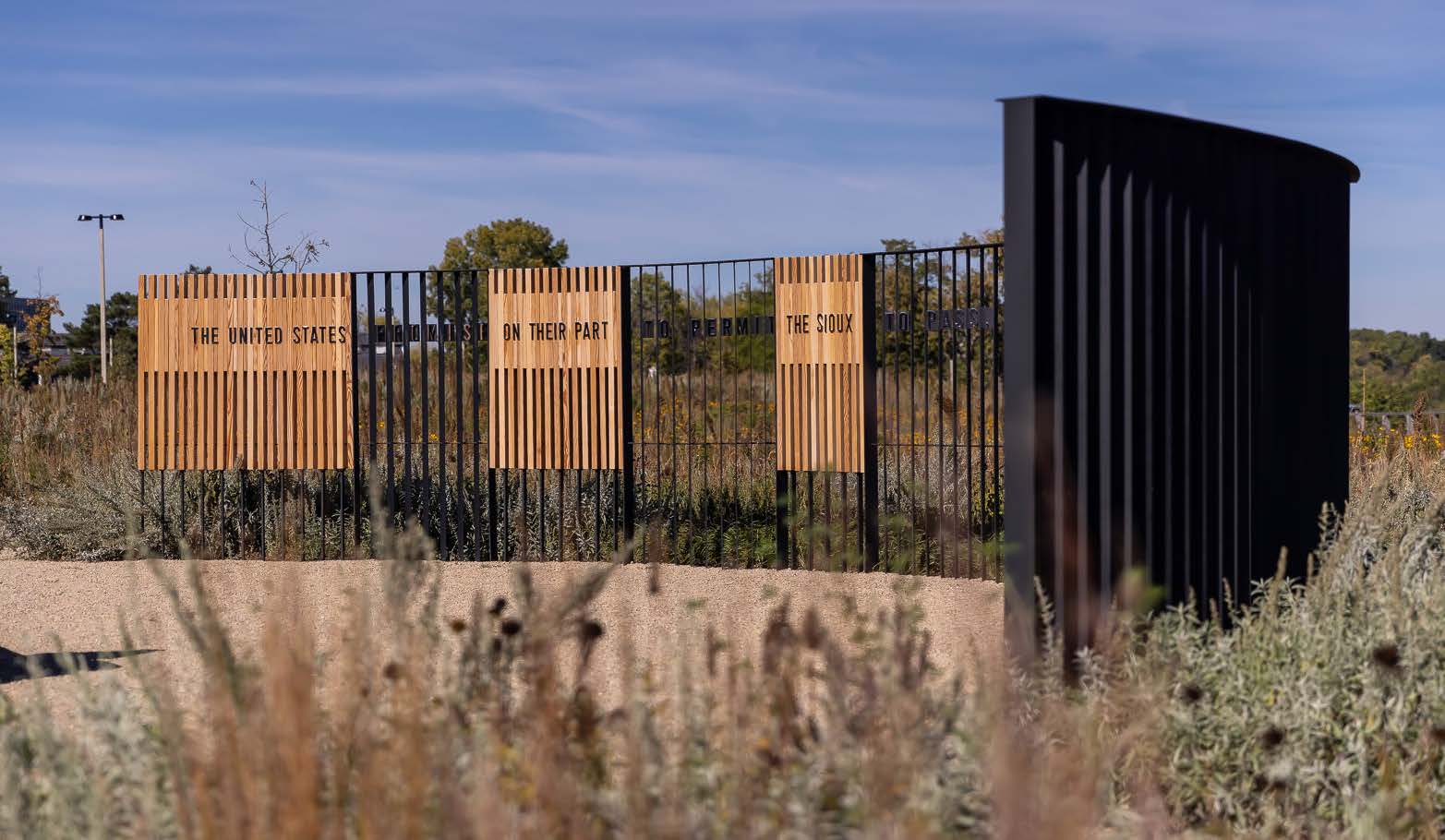
Cultural connections to this place hold great importance to communities who were not engaged in decisions about the site’s use and treatment over the past century. Collaboration incorporated listening to and co-designing with the people whose passionate connections to this place provide the basis of its significance. The Dakota Community Council (DCC), a representative entity of multiple nations with ties to this land, requested acknowledgments of the site as Dakota Homeland, of the site’s traumatic and complicated history, and of Indigenous knowledge, particularly in the way plants, landscape, treaties, and water are presented to visitors.
As a symbol of colonialism and destruction for Native culture, it is essential for this landscape to become a space where Dakota and other Native peoples can feel like they belong. Prior to this project, commemoration and interpretation focused on stories of westward expansion and military history. The design team worked with the Ina Maka subcommittee, DCC, and Indigenous artists to incorporate Dakota language, knowledge, and worldviews into the narratives, images, experience, and dynamic prairie landscape, now providing informed, honest, empathic, and respectful accounts of a difficult past while offering spaces for reflection and healing.
Constellation Garden Remembrance Memorial
Charlotte, North Carolina | 2022
On April 30th, 2019, Reed Parlier and Riley Howell lost their lives, four students were wounded, and classmates, families, friends, and an entire community were forever changed by a school shooting at the University of North Carolina at Charlotte.
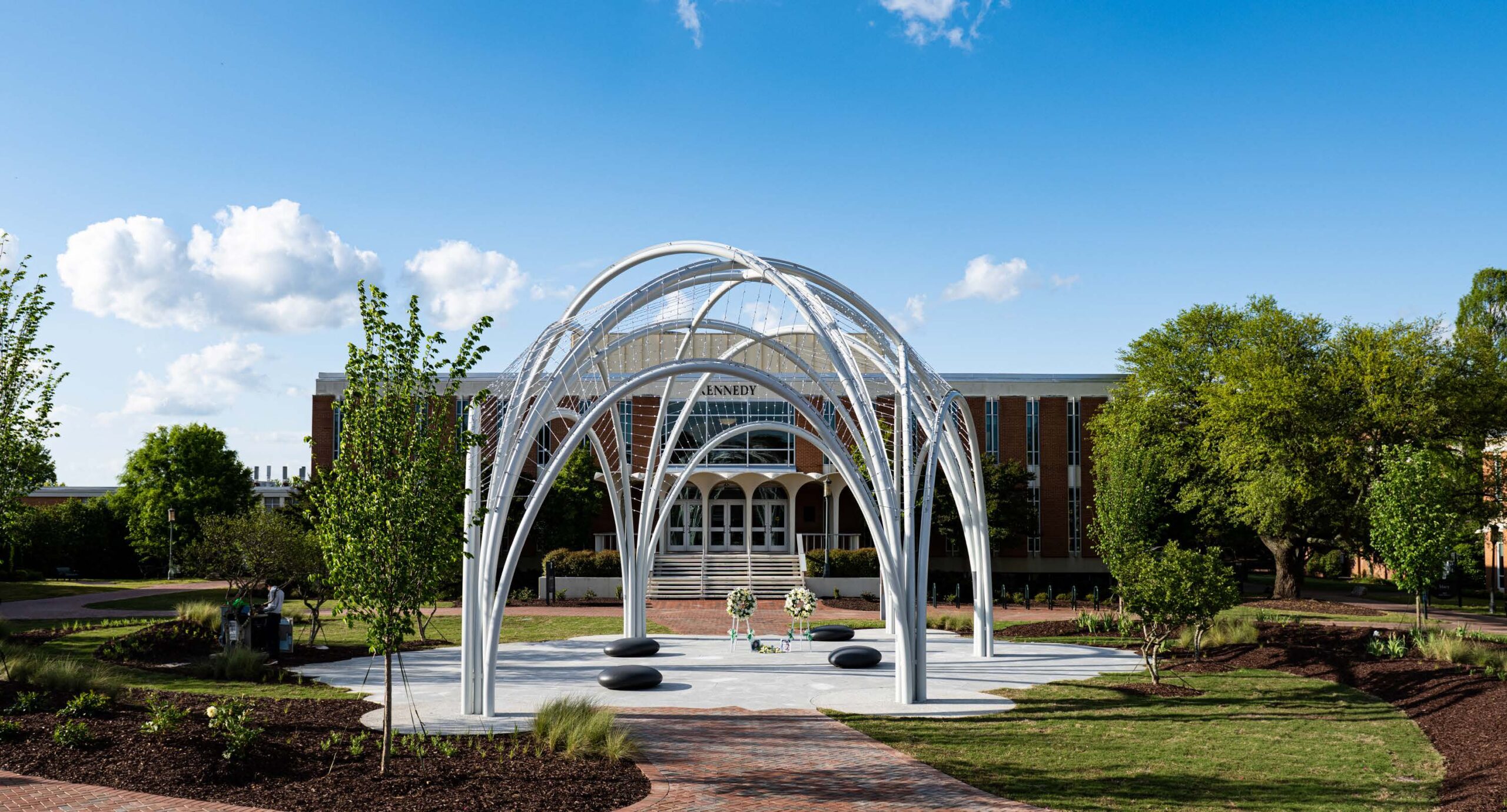
Remembrance is an act, a ritual, and an engagement with the past. Grounded by themes of illumination and healing, the Constellation Garden Remembrance Memorial aims to make remembrance visible and be held in the light, to strengthen the community through human connection, to acknowledge the magnitude of loss, and to embrace an optimistic and a hopeful future.
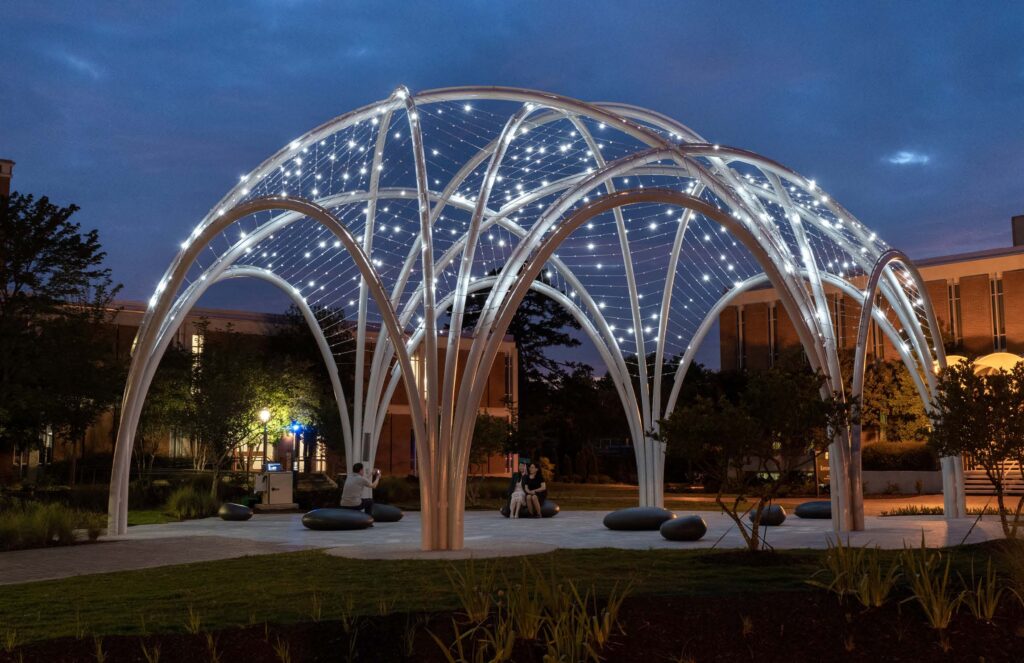
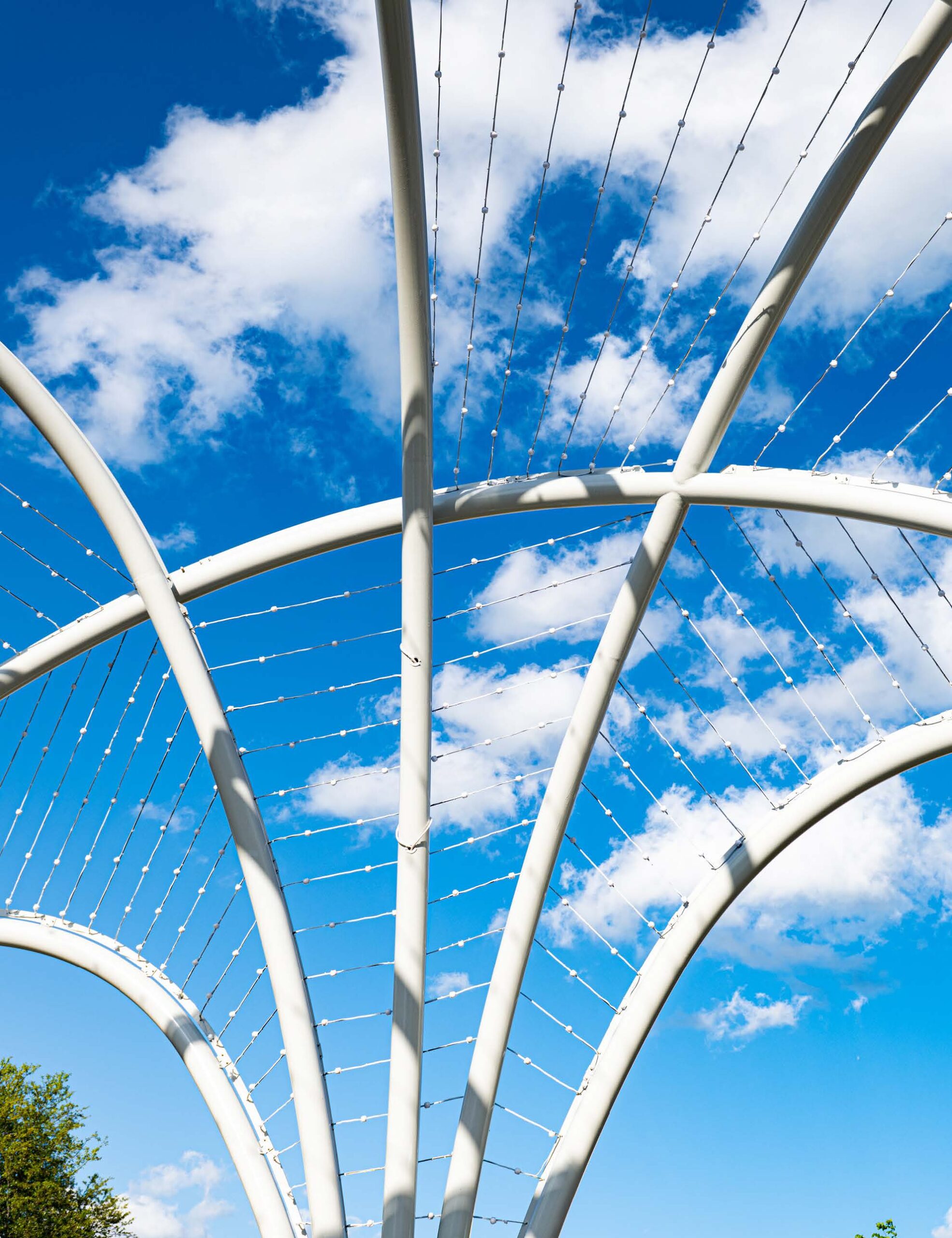
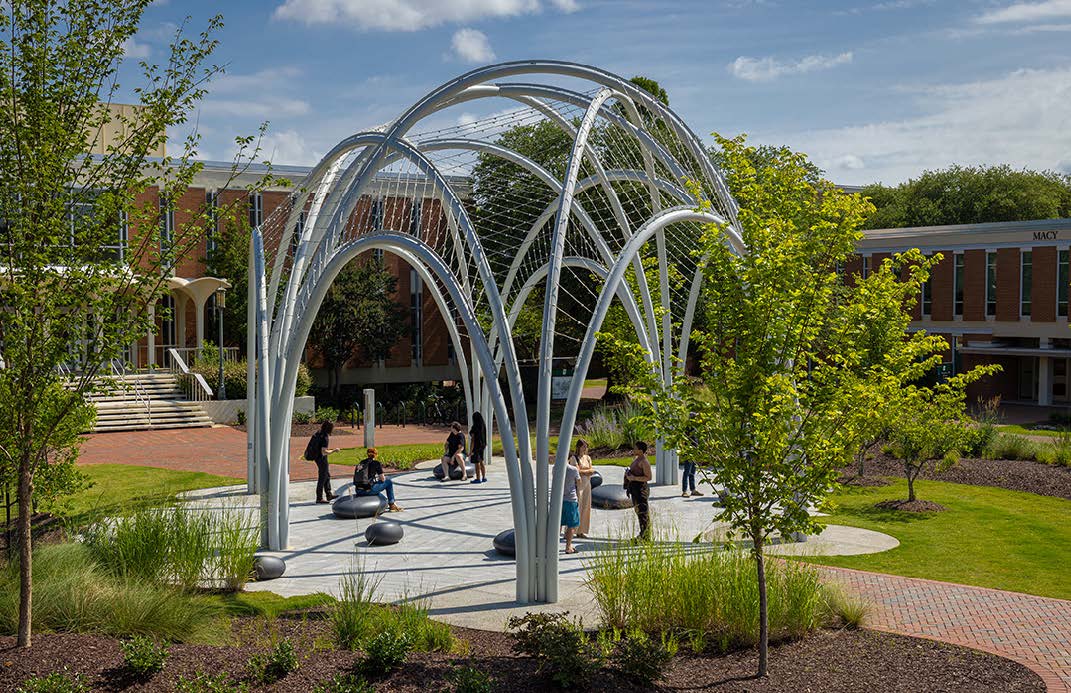
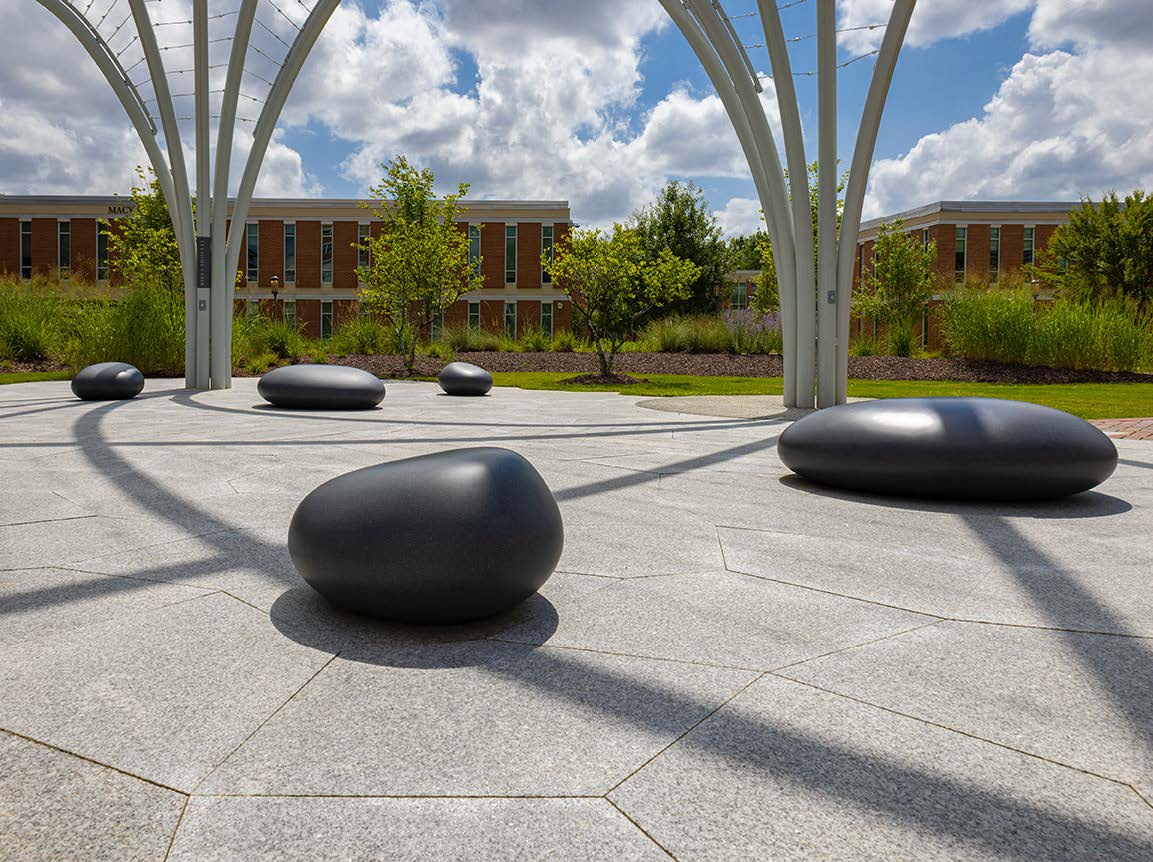
As a memorial, the question of how to materialize meaning and memory led design thinking. The sculpture represents both the vast emptiness of the night sky, and simultaneously the feeling of being connected and together. Designed to heighten the senses, the sculpture is at once delicate, strong, reflective, and ephemeral. The landscape holds the sculpture carefully and softly within it, integrating additional opportunities for seating for study, contemplation, and reflection.
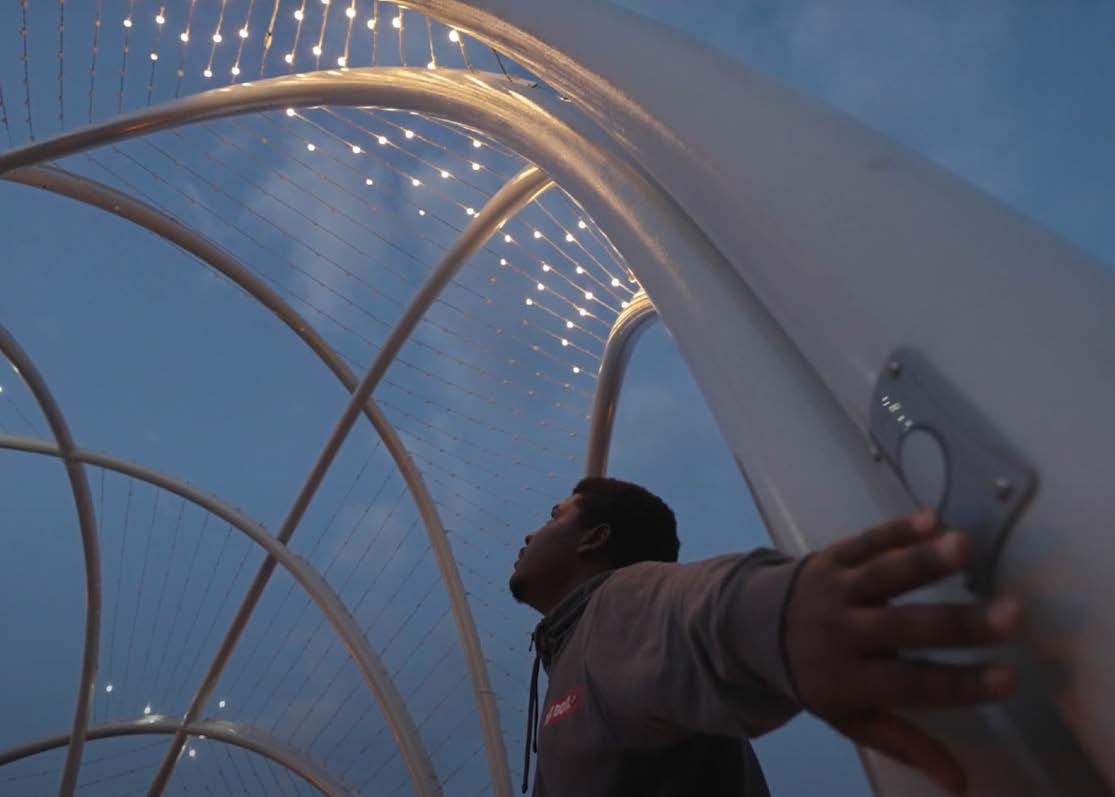
The memorial includes an interactive sculpture made of large steel arcs grounded with six pillars, one to represent each person killed and wounded. The crisscrossing arcs rise 25’ above a granite plaza, creating a cavernous ceiling of arcs that hovers above a circular gathering space embraced by planted landforms and an arc of trees and gardens. Reed and Riley’s pillars are wrapped with commemorative bands that, when touched, send a kinetic wave of increased light intensity through the constellation above, signifying the network of those affected by gun violence. Light ripples quietly and slowly across the sculpture, representing the ever-present constellation of trauma, pain, and loss caused by gun violence.
In Stillness
Cambridge, Massachusetts | 2024
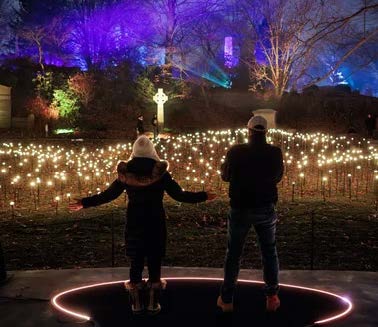
There are many ways to remember, reflect, meditate, or grieve, and many of these experiences include a pause, a moment of quiet—of stillness. This artwork meets us in our moments of stillness; holding space for these thoughts, memories, and prayers— dancing with us as we exchange, giving and receiving.
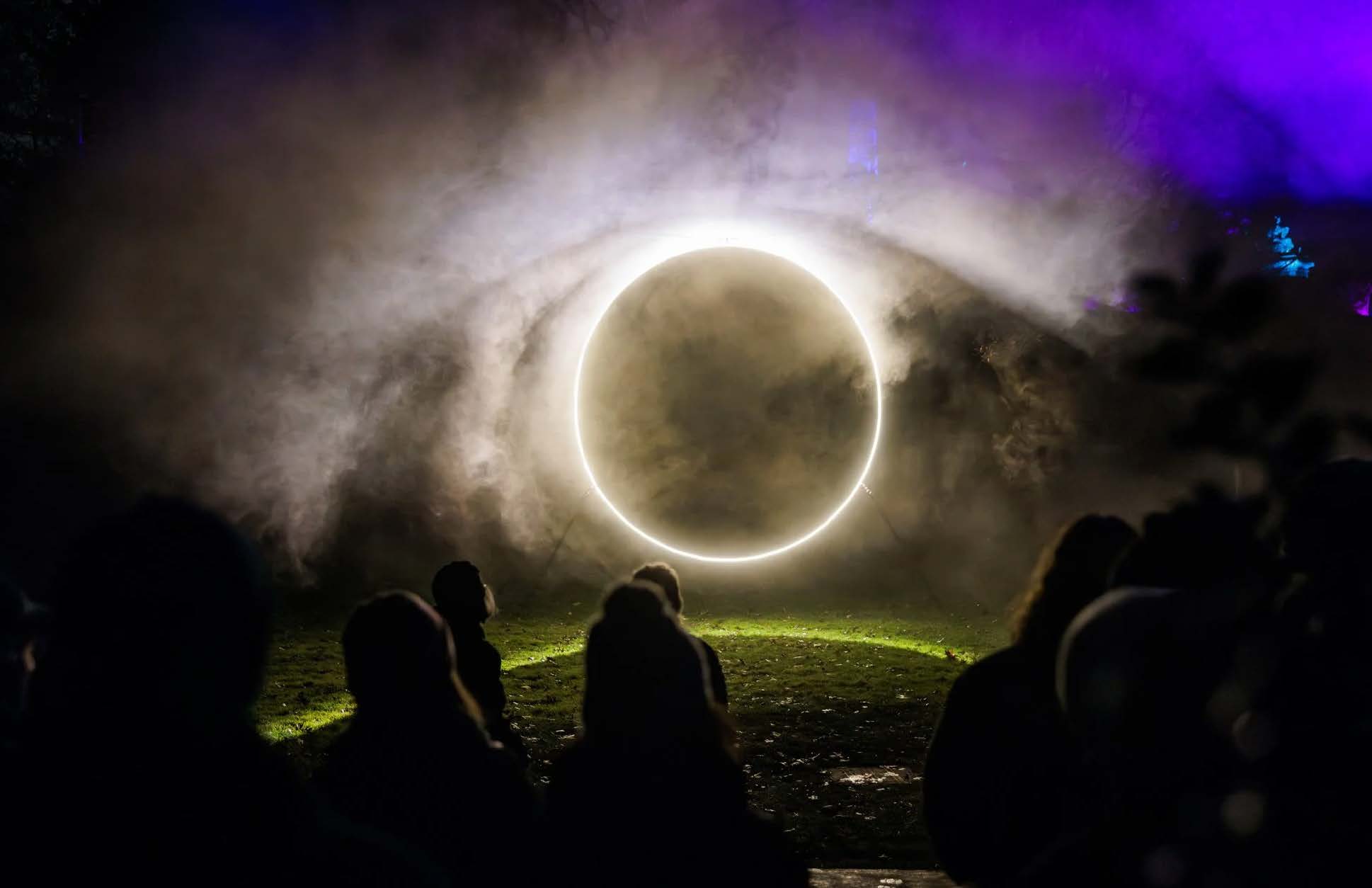
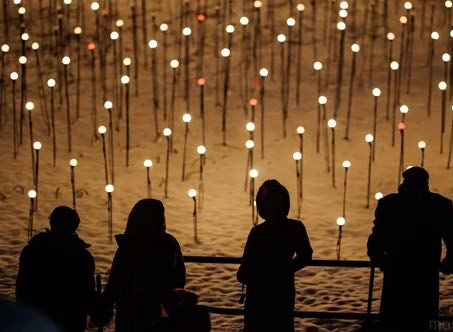
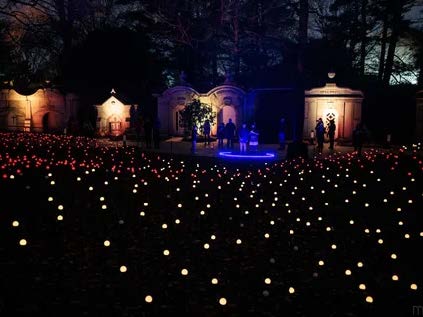
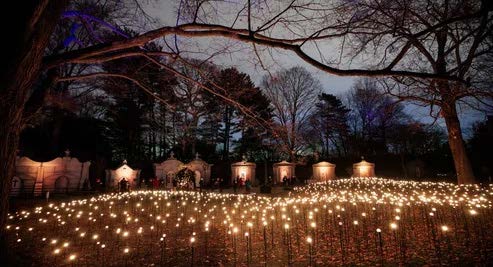
In Stillness is an interactive sound and light installation that registers guests’ physical stillness through light and sound. Upon holding still, the piece becomes quiet, still, and dark. When one breaks their stillness with a gesture, that movement is expressed through one thousand points of light embedded in the landscape and a spatialized sound score; suggesting that the landscape itself is acknowledging one’s stillness and subsequent movement.
The artwork is a part of a collection of work that has been created for the annual event SOLSTICE: Reflections on Winter Light at Mount Auburn Cemetery.