Rafael Lozano-Hemmer was born in Mexico City in 1967. He received a B.Sc. in Physical Chemistry in 1989 from Concordia University in Montréal, Canada, and, in 2025, was awarded an honorary doctorate in fine arts from the Ontario College of Art and Design (OCAD) in Toronto.
An artist operating at the intersection of architecture and performance art, he develops platforms for public participation using technologies like robotic lights, digital fountains, computerized surveillance, media walls, and telematic networks. Inspired by phantasmagoria, carnival, and animatronics, his light and shadow works are “antimonuments for alien agency”.

He was the first artist to represent Mexico at the Venice Biennale with an exhibition at Palazzo Van Axel in 2007. He has also shown at Biennials in Cuenca, Havana, Istanbul, Kochi, Liverpool, Melbourne NGV, Moscow, New Orleans, New York ICP, Seoul, Seville, Shanghai, Singapore, Sydney, and Wuzhen. His public art has been commissioned for the Millennium Celebrations in Mexico City (1999), the Expansion of the European Union in Dublin (2004), the Student Massacre Memorial in Tlatelolco (2008), the Vancouver Olympics (2010), the pre-opening exhibition of the Guggenheim in Abu Dhabi (2015), and the activation of the Raurica Roman Theatre in Basel (2018). Collections holding his work include MoMA and Guggenheim in New York, TATE in London, MAC and MBAM in Montreal, Jumex, and MUAC in Mexico City, DAROS in Zurich, MONA in Hobart, 21C Museum in Kanazawa, Borusan Contemporary in Istanbul, CIFO in Miami, MAG in Manchester, SFMOMA in San Francisco, ZKM in Karlsruhe, SAM in Singapore and many others.
He has received two BAFTA British Academy Awards for Interactive Art in London, a Golden Nica at the Prix Ars Electronica in Austria, “Artist of the year” Rave Award from Wired Magazine, a Rockefeller fellowship, the Trophée des Lumières in Lyon, an International Bauhaus Award in Dessau, the title of Compagnon des Arts et des Lettres du Québec in Quebec, and the Governor General’s Award in Canada. He has lectured at Goldsmiths College, the Bartlett School, Princeton, Harvard, UC Berkeley, Cooper Union, USC, MIT MediaLab, Guggenheim Museum, LA MOCA, Netherlands Architecture Institute, Cornell, UPenn, SCAD, Danish Architecture Center, CCA in Montreal, ICA in London, and the Art Institute of Chicago.
In the past few years, Lozano-Hemmer was the subject of thirty solo exhibitions worldwide, including a major show at the Hirshhorn Museum in Washington DC, the inaugural show at the AmorePacific Museum in Seoul, and a mid-career retrospective co-produced by the Musée d’Art Contemporain de Montréal and SFMOMA. In 2019, his immersive performance “Atmospheric Memory” premiered at the Manchester International Festival, and his interactive installation “Border Tuner” connected people across the US-Mexico border using bridges of light controlled by the voices of participants in Ciudad Juárez, Chihuahua and El Paso, Texas. Major recent solo exhibitions include “Listening Forest,” which featured his largest collection to date of outdoor works, installed over 120 acres of land at Crystal Bridges Museum of American Art in Bentonville, Arkansas, “Common Measures,” his first exhibition at PACE Gallery, New York, and “Translation Island,” a 2-km parcours which included ten public artworks, in Lulu Island, Abu Dhabi.
Excerpts from Letter of Intent
“What draws me to this commission is what it refuses to do. It does not ask the artist to settle the debate about Columbus, nor to author an exhaustive history of this place. It asks something harder: to hold incompatible truths in the same physical space—the Haudenosaunee Confederacy with Onondaga at its Central Fire; the 1934 Italian-American claim on belonging; the Powelson Site, already a civic instrument for graduations, protests, art markets, and grief.”
“My process begins with listening. Before form or material—and before the question of whether the existing bronze stays, relocates, or is repurposed—I would spend time in Syracuse with the Onondaga Nation, the Cathedral Square congregations, participants in the InterFaith Works Dialogue Circles, and residents of the Powelson Site. Atelier Lozano-Hemmer is multidisciplinary by design: our twenty-one full-time team iterates with local collaborators wherever we work. We listen, propose, gather feedback, refine.”
“A live mirror does not decide what is reflected in it. The site would offer mechanisms for participation — microphones, surfaces, sensors, light—that any member of the public could activate. Each trace would remain available to the next person who arrived. Dissent would not be erased; it would leave a ring, like one on a tree. The piece would, by design, never be finished… For this work, we are not so much interested in articulating a collective response. Instead, we pursue a connective one—holding disparate communities in legible relation without forcing them into a single identity, narrative, or aesthetic.”
Previous Work Examples
Speaking Willow
Planet Word Museum of Language in Washington DC | 2020
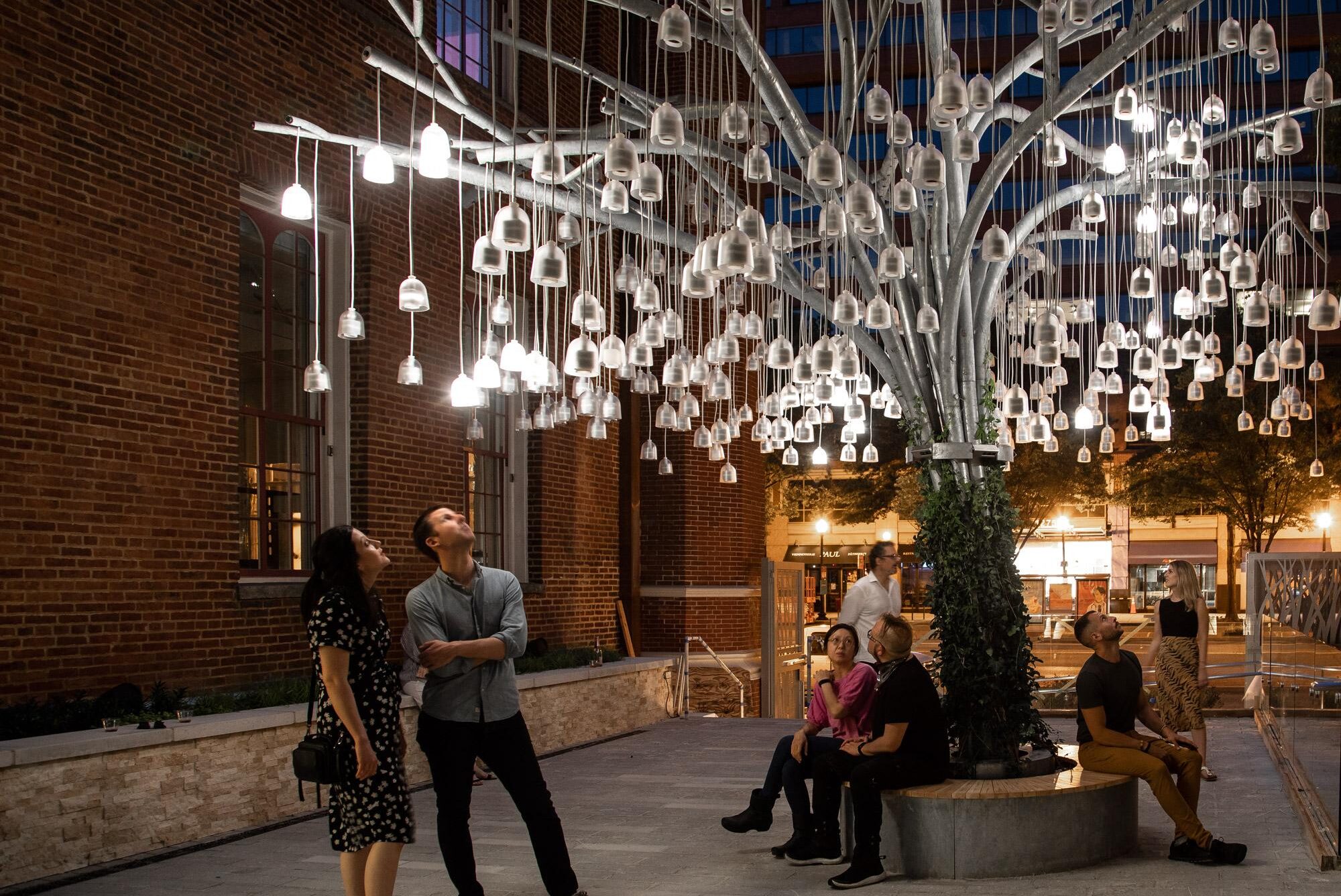
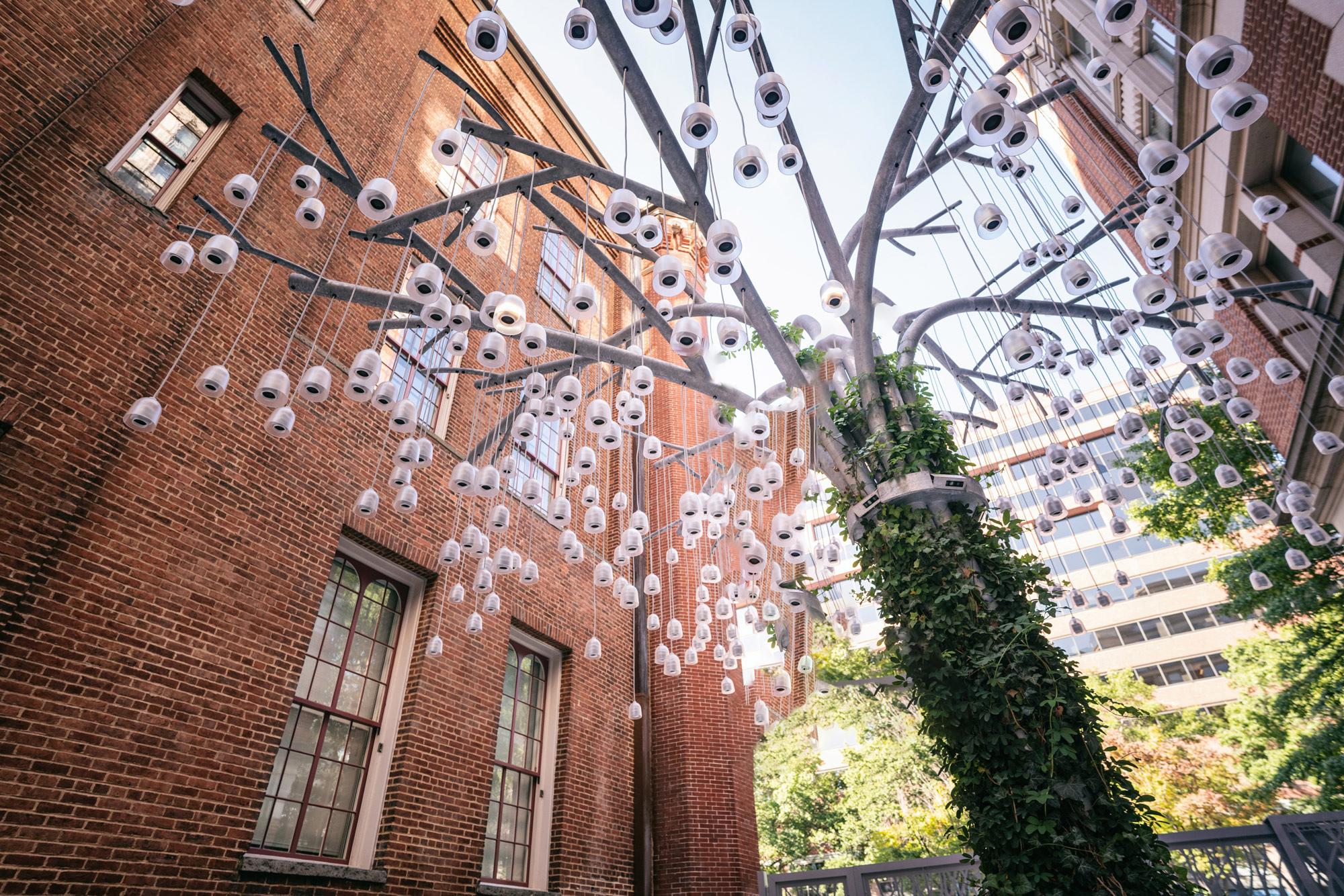
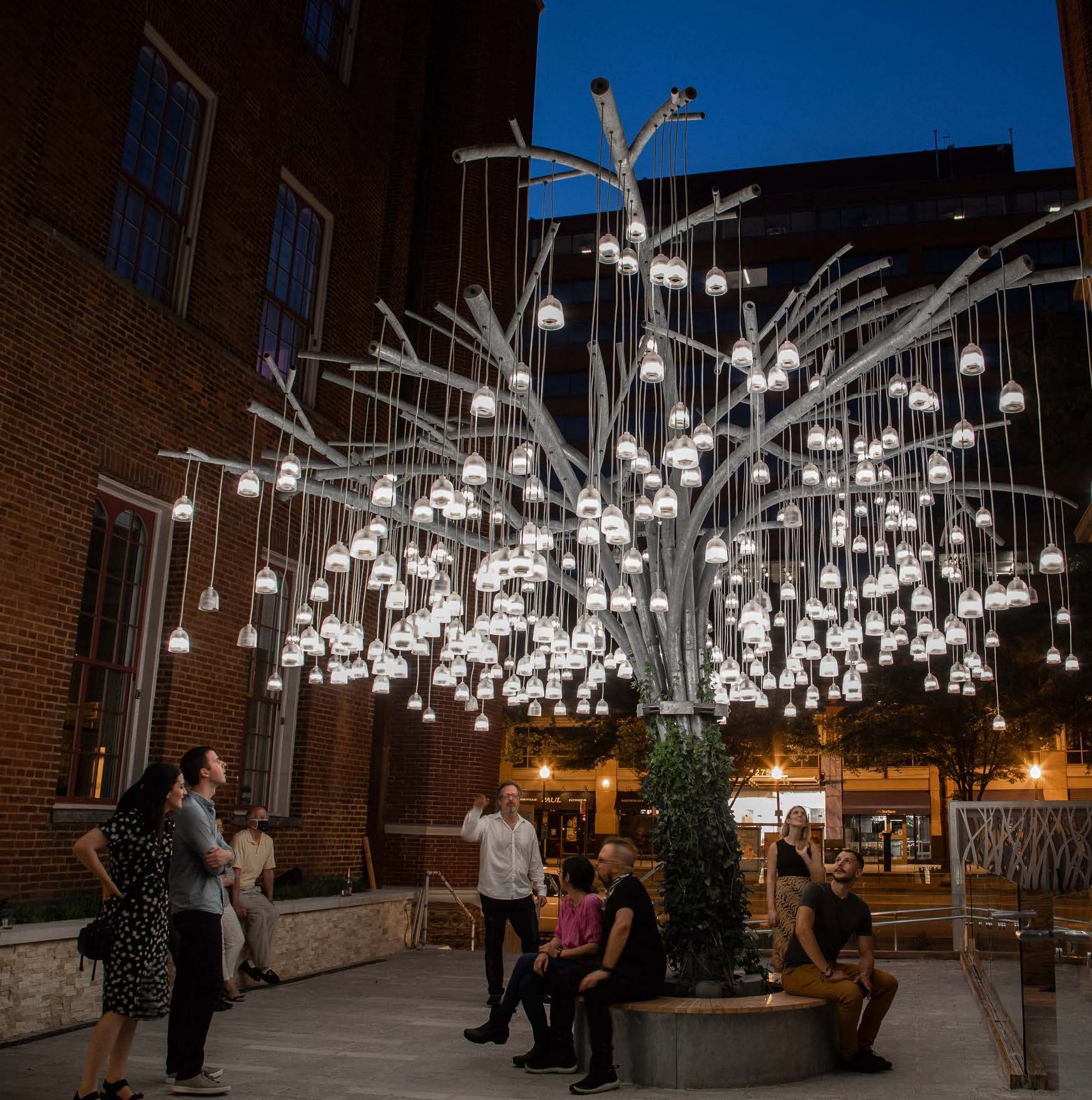
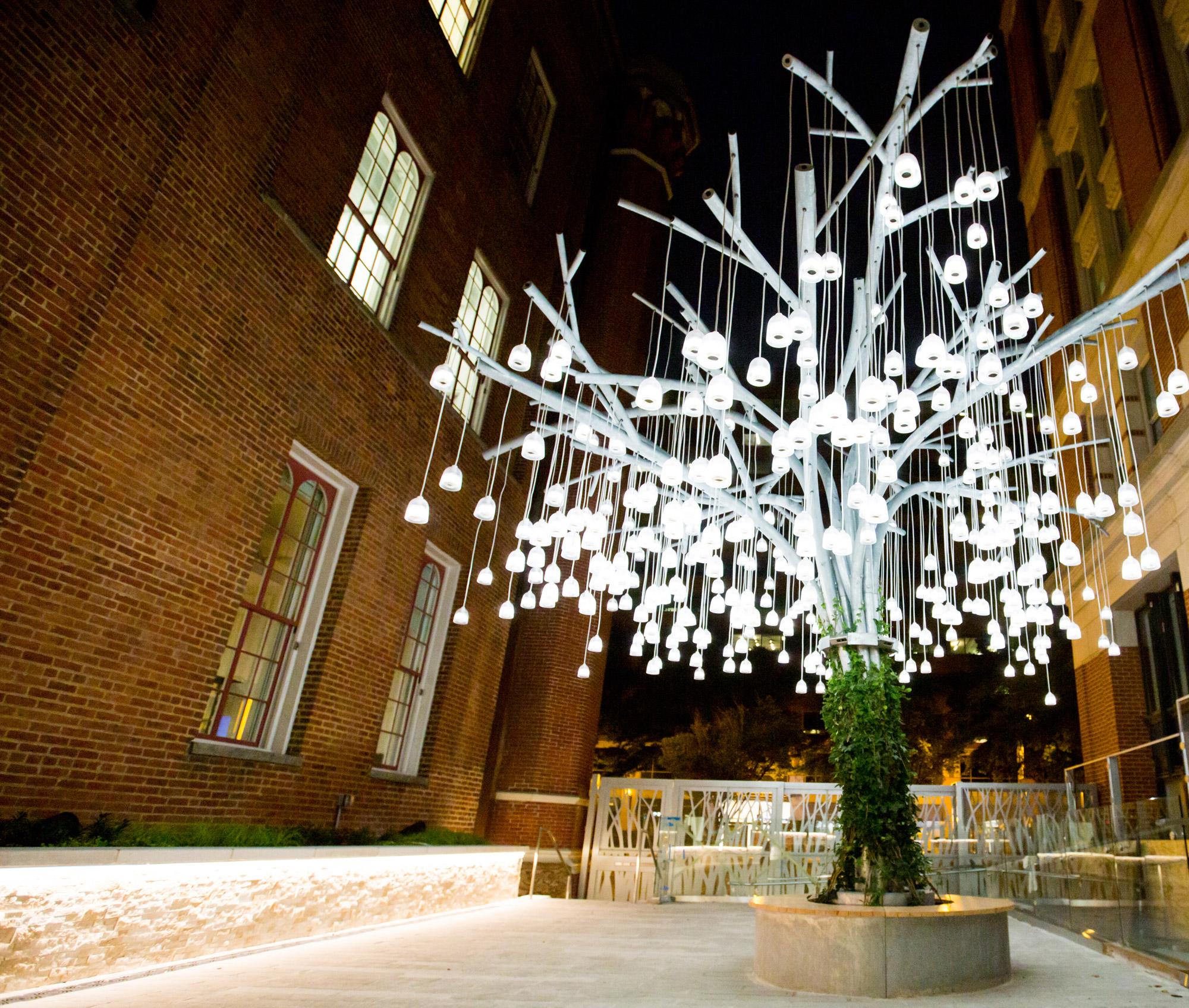
“Speaking Willow” is a permanent sound sculpture in the shape of a weeping willow tree, 20 feet high, which adorns the entrance of the Planet Word Museum of Language in Washington DC. The tree sculpture is fabricated in aluminum and is hollow, except the trunk and branches carry data cables that emerge from the structure and hang vertically, slowly swaying with the wind. The tree is covered by living vine and Ivy plants that warm-up the design. On the end of each cable is a compact, weatherized, directional, self-amplified speaker with its own LED lights. The speakers hang between 7 and 14 feet from the ground, each reproducing a unique sound channel. Each speaker has a different library of sound archives representing a single world language: field recordings, poetry, speeches and other curated material playback from the wikitongues archive.
There are over 440 speakers hanging so the tree contains words from most living languages. By default all the speakers are silent, but as visitors stroll around a computerized tracking system detects them and triggers playback of the speakers positioned directly over them. A small white LED light also lights up in each activated speaker. The sound playback is quiet, audible only within 6 to 10 feet away, within earshot of the passers-by, creating a polyphonic echo, a cloud of whispers that represents the diversity, fragility and beauty of the world’s languages.
Border Tuner
El Paso, Texas and Ciudad Juárez, Chihuahua | 2019
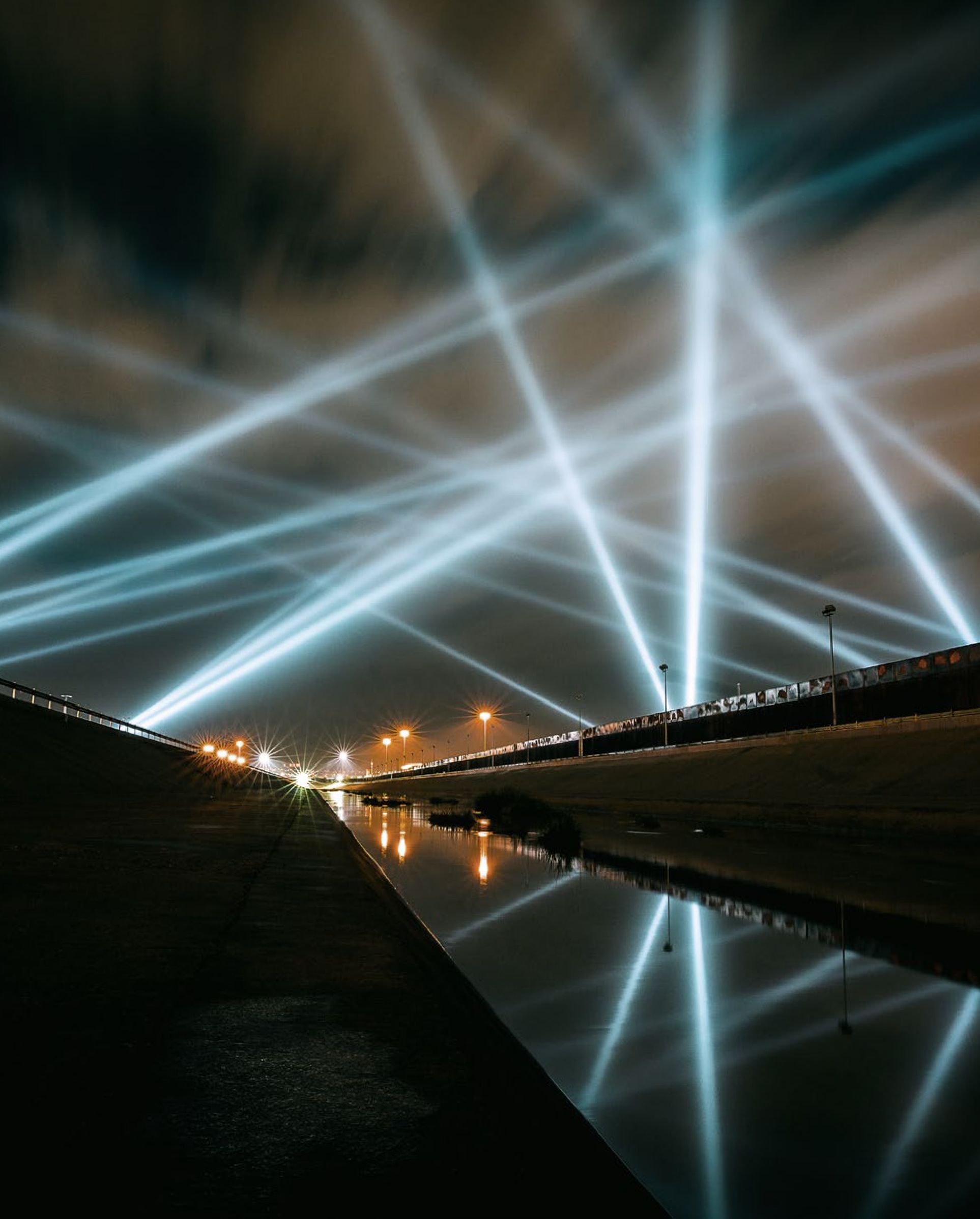
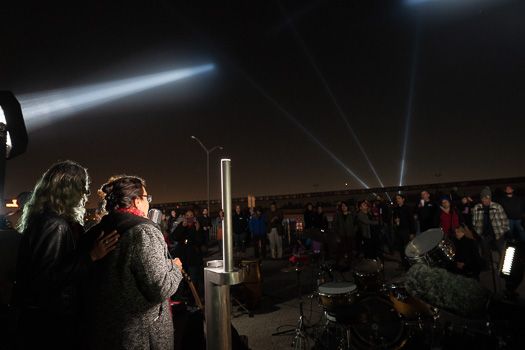
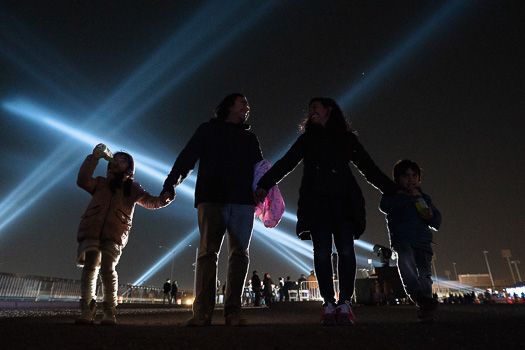
“Border Tuner” was a large-scale, participatory art installation designed to interconnect the cities of El Paso, Texas, and Ciudad Juárez, Chihuahua. Powerful searchlights made “bridges of light” that opened live sound channels for communication across the US-Mexico border. Each of the interactive “Border Tuner” stations featured a microphone, a speaker and a large wheel or dial. As a participant turned the dial, three nearby searchlights created an “arm” of light that followed the movement of the dial, automatically scanning the horizon. When two such “arms of light” met in the sky and intersected, a bidirectional channel of sound was opened between the people at the two remote stations. As they spoke and heard each other, the brightness of the “light bridge” modulated in sync, creating a glimmer similar to a Morse code scintillation. Every interactive station could tune into any other, so for example, a participant in Mexico could connect to the three US-based stations or to the other two in Mexico.
The project brought together tens of thousands of people, reuniting families on both sides of the border, creating new connections, performing poetry recitals and serenades, observing mournful vigils, and staging the vibrancy of the diverse culture and activism in the region.
Volumetric Solar Equation
Musée national des beaux-arts du Québec, Canada | 2018
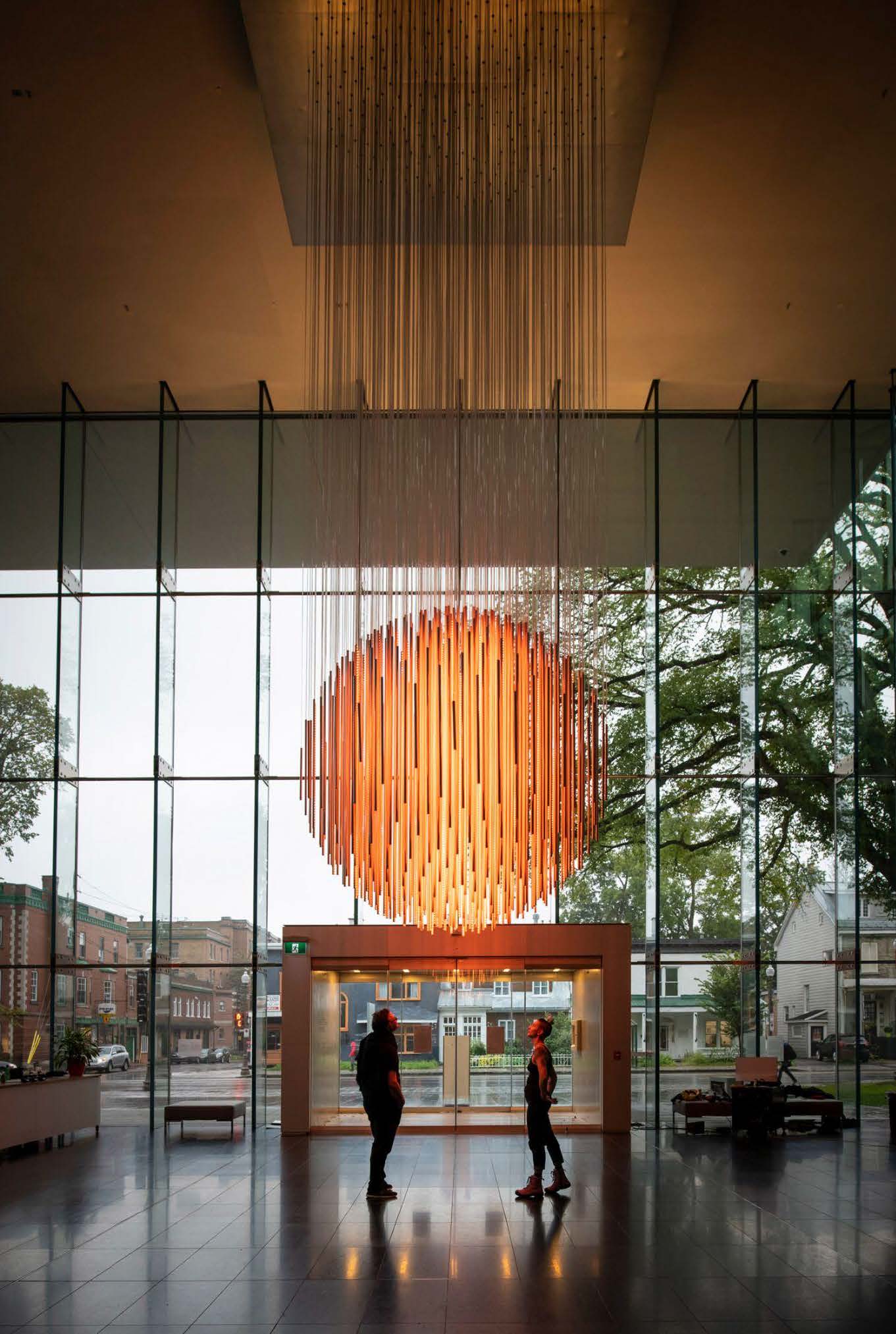
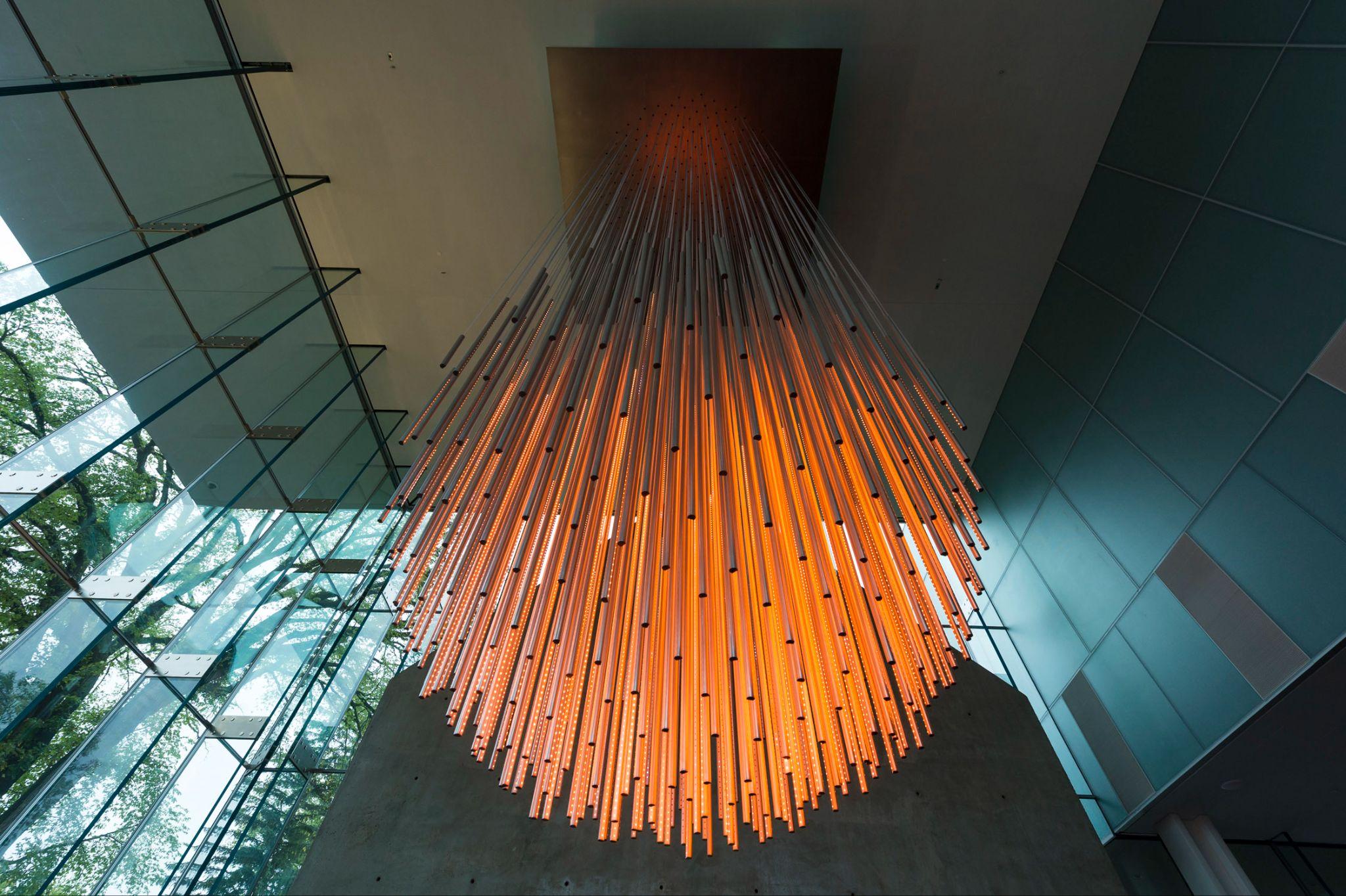
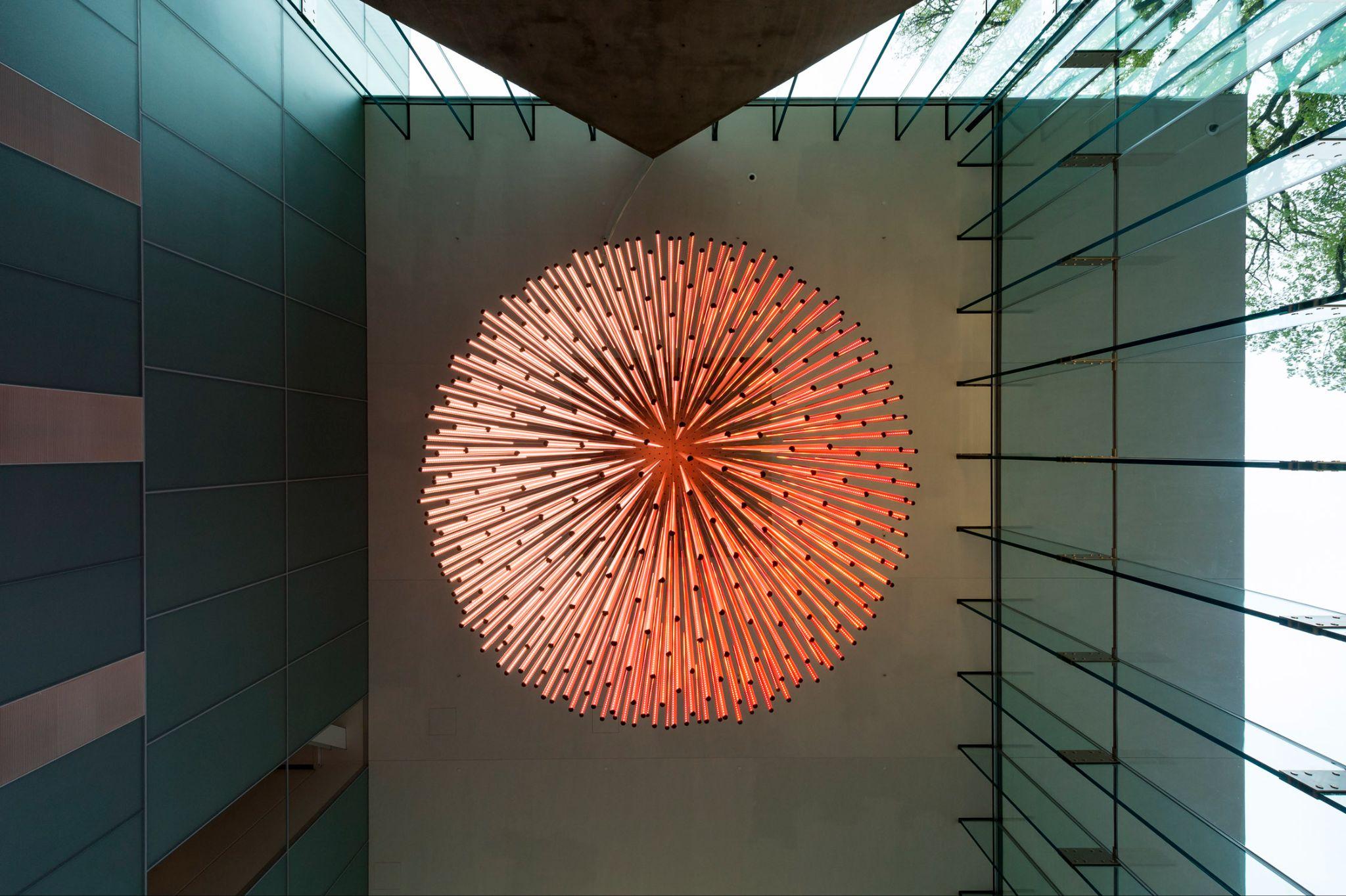
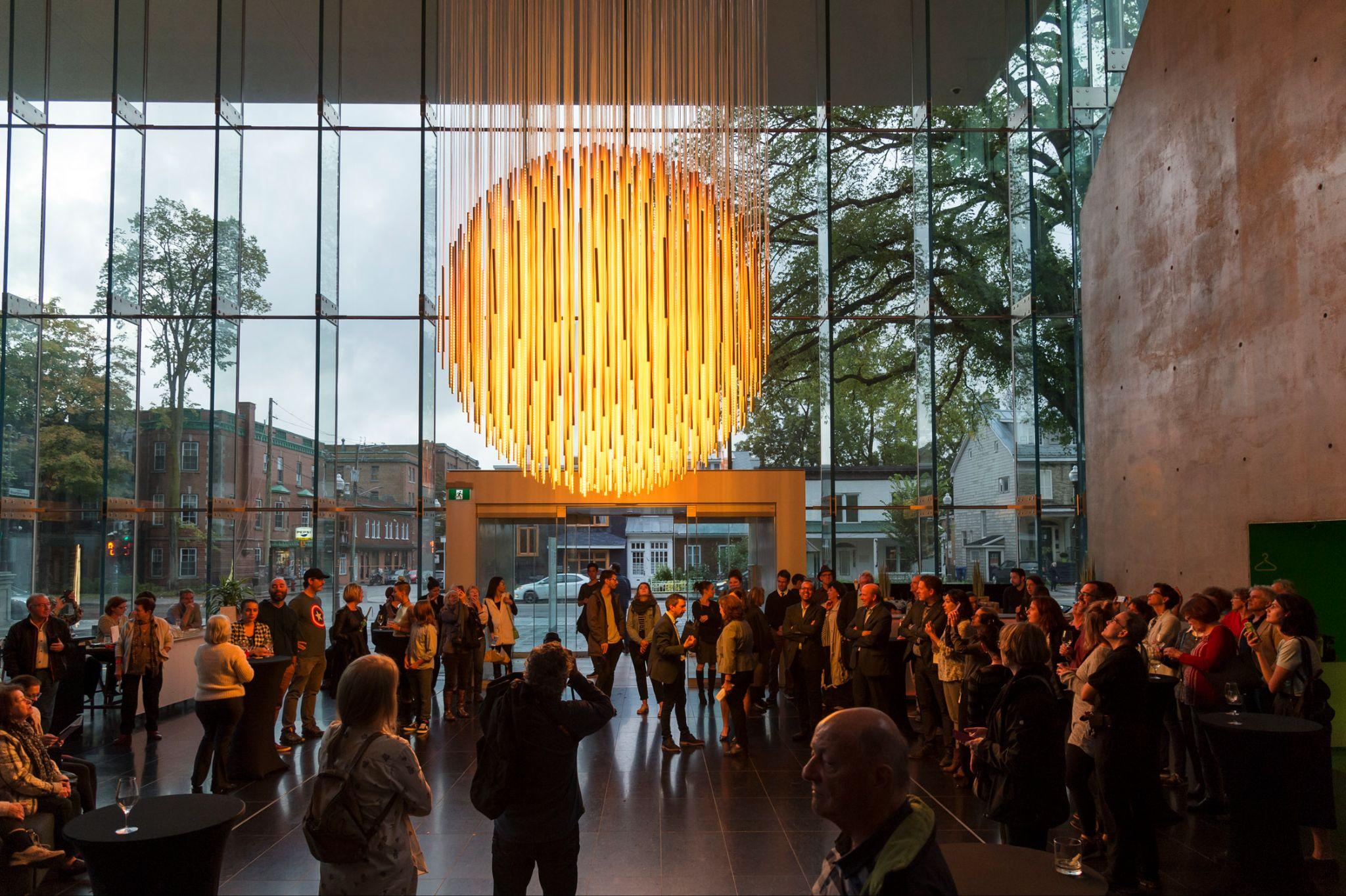
“Volumetric Solar Equation” is an iconic chandelier, a constantly changing, spherical volumetric display that simulates the turbulence, flares, and spots visible on the surface of the sun. The piece is animated by fluid dynamic equations—reaction-diffusion, Navier-Stokes, Perlin noise, and fractal flames—combined with the latest imagery from NASA’s Solar Dynamics Observatory (SDO) and Solo and Heliospheric Observatory (SOHO), and is inspired by geometric abstraction artworks by Latin American artists such as Jesús Rafael Soto, Carlos Cruz Diez, and Julio Le Parc. The content consists of a live simulation, not a video loop, that never repeats itself. Three metres in diameter, the sphere is made of 25,580 LED lights on 342 battens, which are arranged according to equations developed by Pierre de Fermat, specifically a spiraling pattern used to describe plant phyllotaxis. The sphere, therefore, has no vanishing points.
While pertinent environmental questions related to global warming, drought, or UV radiation might arise from the contemplation of this piece, Solar Equation also intends to evoke romantic environments of ephemerality, mystery, and paradox. Cultures around the world each have unique sets of solar mythologies and this project seeks to be a platform for both the expression of traditional symbolism and the emergence of new stories.
Undercurrents
Buffalo Bayou Park Cistern, Houston, Texas | 2026
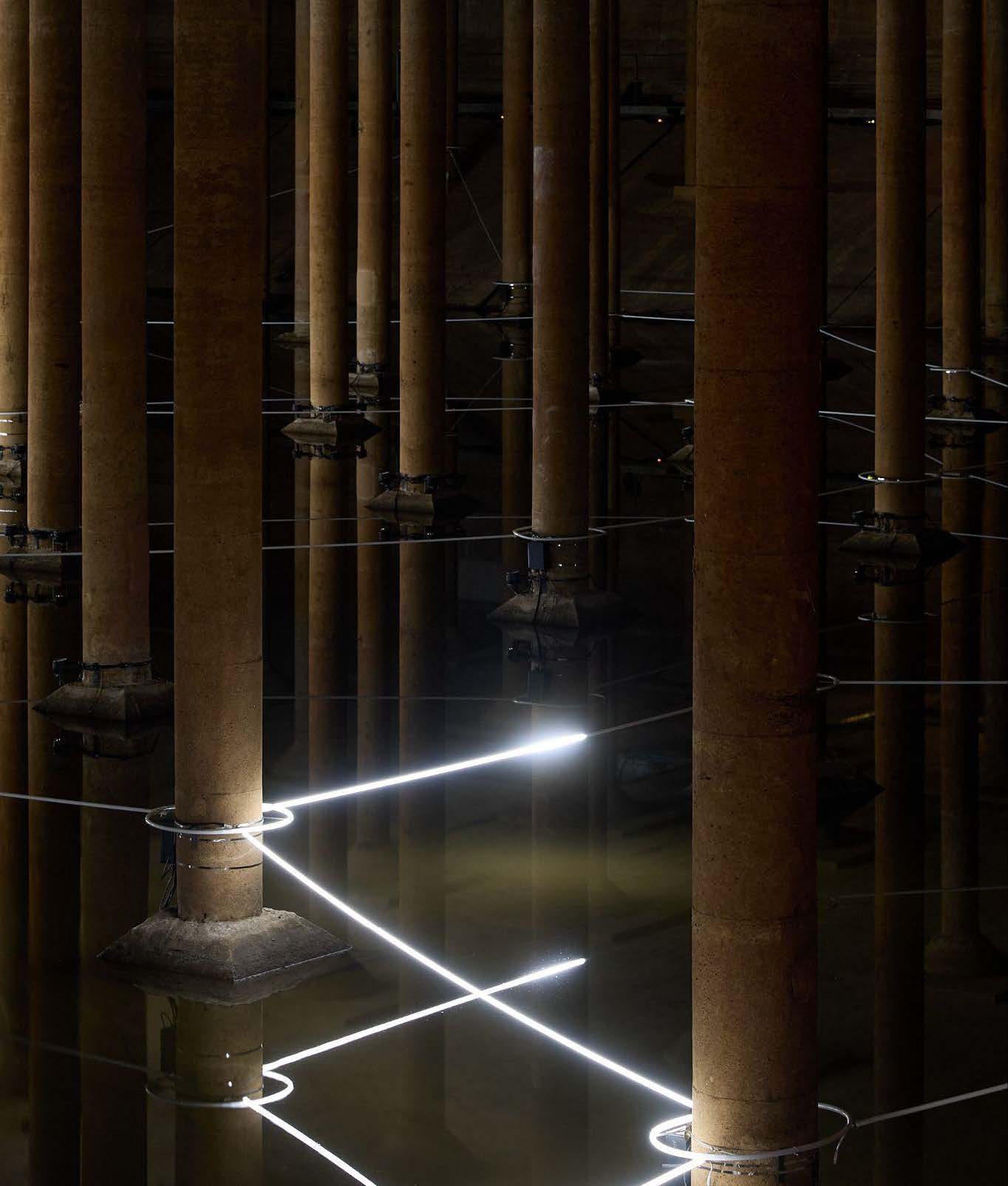
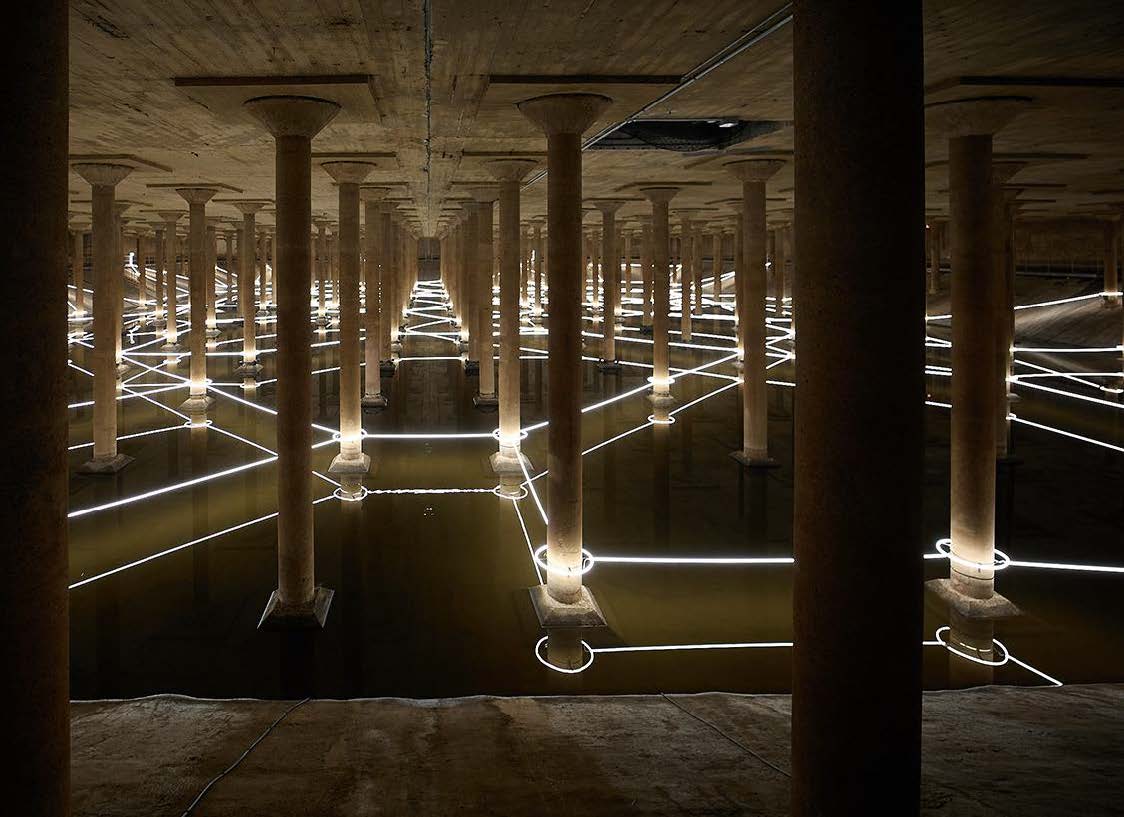
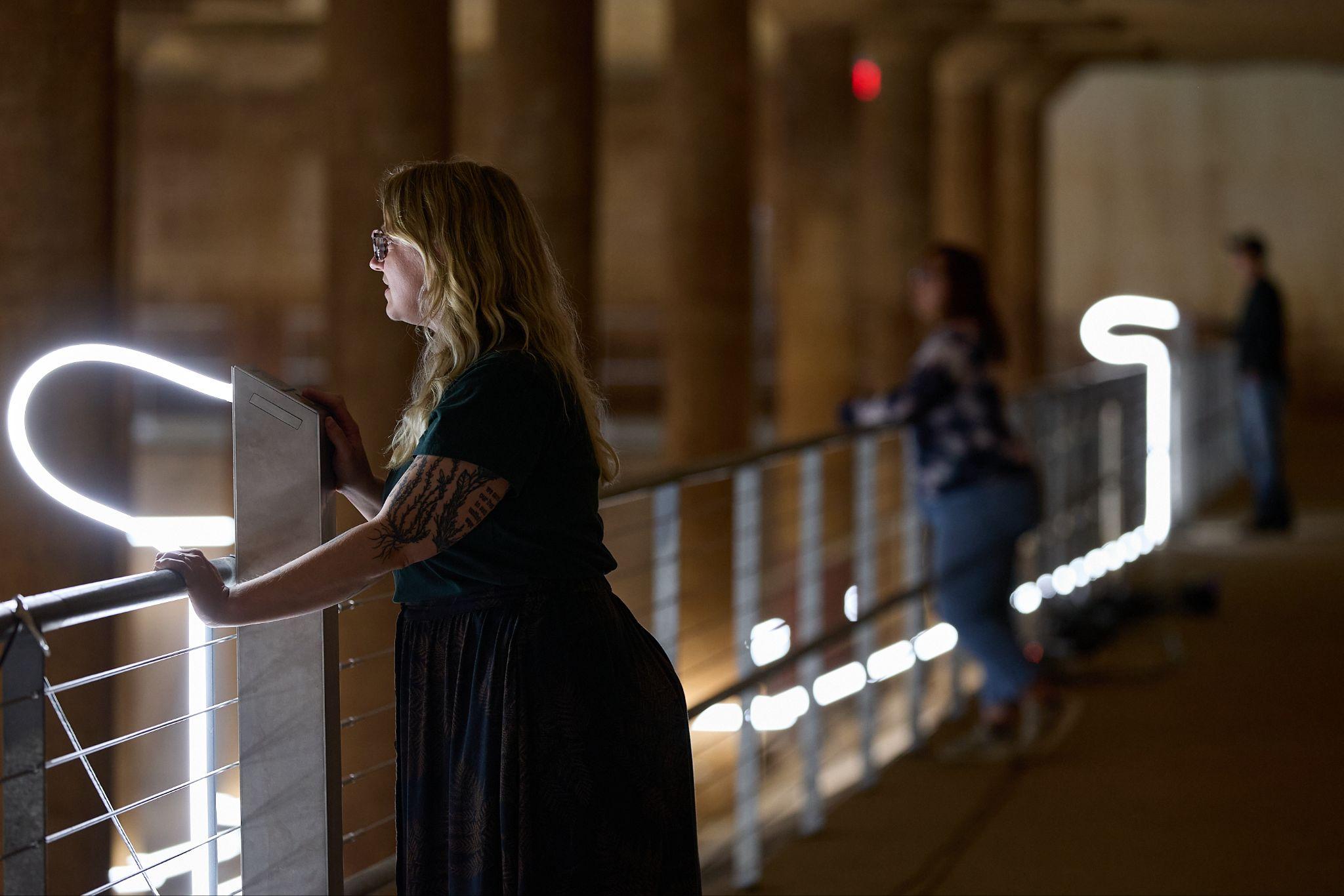
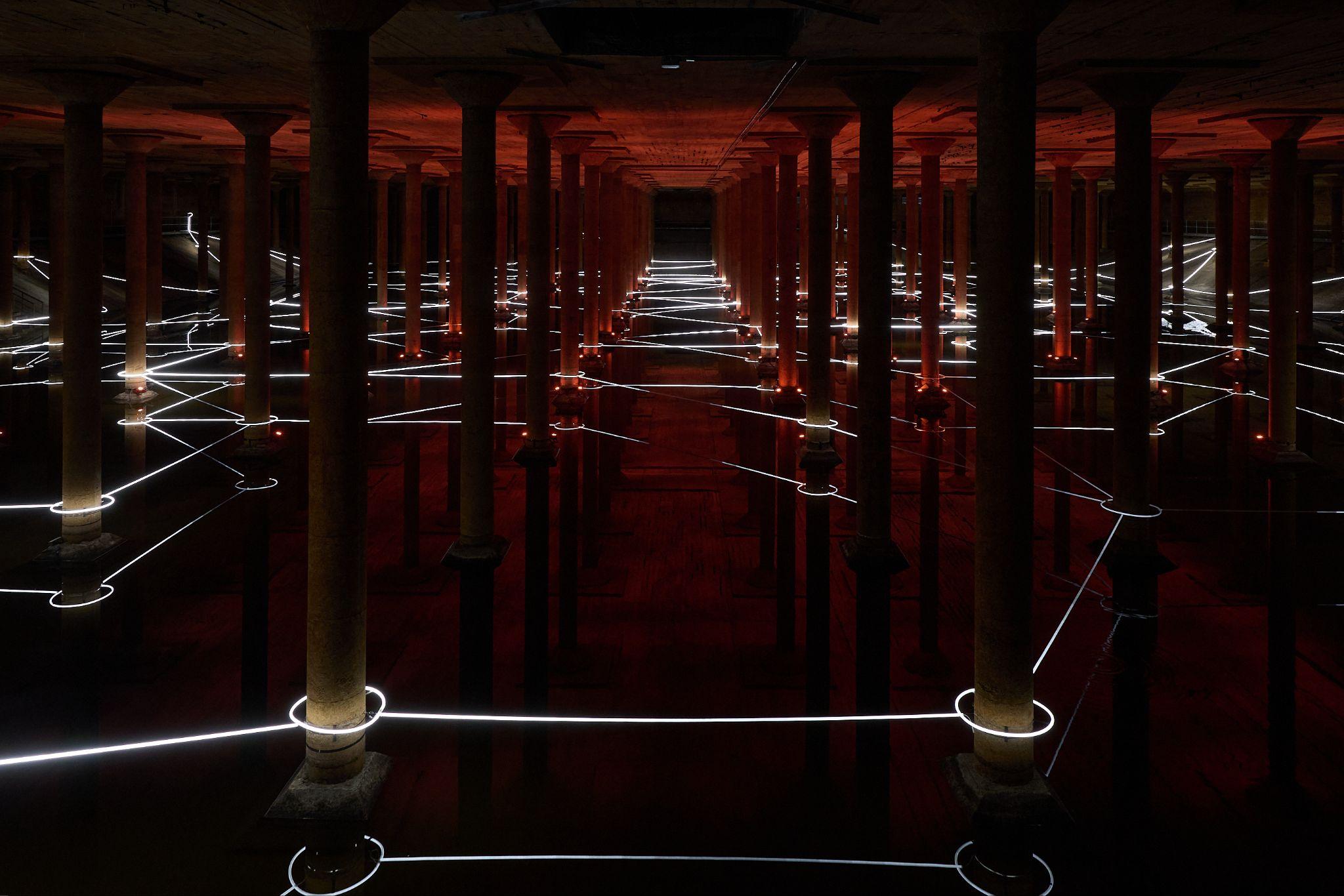
Constructed as an underground echo chamber of voice and light, “Undercurrents” creates an ever-shifting network of connections across time, space, and meaning. A seemingly endless “switchboard” of connection unfolds throughout the cistern, where participant voices are transformed into pulses of light that travel along branching paths. Connected to this network are eight custom-made intercoms, each consisting of a microphone, a speaker, and a push button, placed at regular intervals along the perimeter. When a visitor presses an intercom button and speaks, their message is encoded into modulations of light brightness and visually transmitted along a path that may fork at any given cistern column (a “node”), bouncing and traveling steadily until it reaches another intercom, where it plays back slightly mixed with echoes of voices from the past.
Along the way, an AI system looks for matching patterns in an archive of recordings, including commissioned poems by poets Nick Flynn, Aris Kian, Martha Serpas, Jennifer Teets, and Roberto Tejada. With each new voice, an “echo” is produced from this memory, so that each message carries traces of what came before, blending into a poetic soundscape. At any given time, up to twelve participants can be sending and receiving voice messages live, setting the cistern alight with glimmering paths. If no one is participating, the piece begins to trigger itself automatically, as if dreaming, playing back curated voices and recalling earlier exchanges. A “timekeeper” wave of light is also periodically activated, scanning the entire space to clear any stranded messages.
The project features over 420,000 light pixels, controlled by a single custom-made computer program. “Undercurrents” engages the cistern’s natural reverberation to suggest that communication is never neutral. It is shaped by space, perception, and history. The cistern becomes an audiovisual forum where fleeting expressions of presence—of being here, now, together—are made tangible.
Unfinished Arch
Toronto Waterfront, Sherbourne Common, Toronto, Canada | 2026
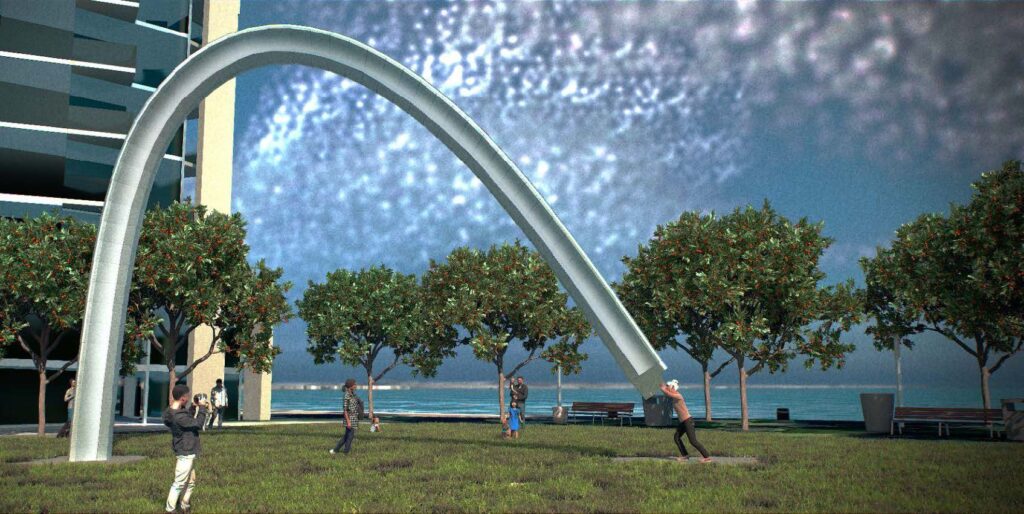
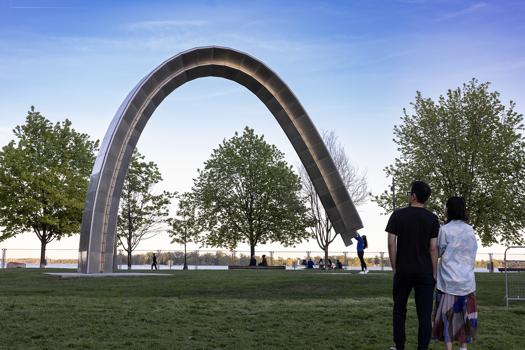
Visitors are encouraged to “complete” the arch by supporting its truncated edge, which is stepped to create surfaces reachable by people of all heights. The iconic image created is that of the participant is holding the weight of the entire structure, like in Pisa. A triangular metal plate will be planted exactly at the location where the missing support for the column would be. By stepping on the plate, people will get the feeling that they are “closing a circuit” between the floor and the arch, illuminating it, as if electricity were passing through their bodies. When people touch the arch and “complete” it, a series of contact sensors detect this and the arch lights up automatically with a swift linear animation of built-in LED white lights. The animation begins by turning on the lights closest to the participant and then gradually illuminating the rest of the arch, with the LEDs at the base being the last ones to light up. When the participant stops touching the arch the animation is reversed: the light starts turning off from the LEDs at the base of the arch and they gradually turn off so the last ones to turn off are those closest to the truncated end. This light effect is visible even in daytime because the surfaces illuminated are the undersides of the triangular profile.
“Unfinished Arch” will be an iconic, modern, interactive landmark that will invite people to personalize their visit to Sherbourne Common.
Arkansas Text Stream
Commissioned by Crystal Bridges Museum of Art, Bentonville.
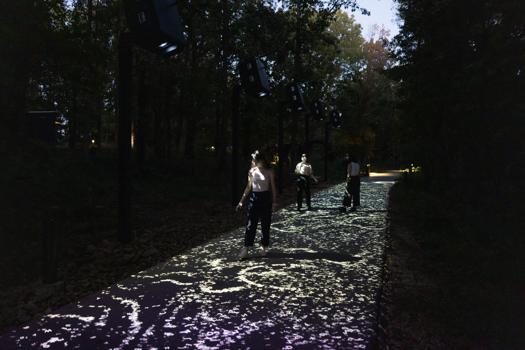
“Arkansas Text Stream” (Text Stream 9) consists of brief texts sourced from Northwest Arkansas community members presented in a slow stream of letters that transform into phrases as the presence of people is detected.
Flowing from just beyond view, a rush of letters projects onto a 70-yard-length pathway, slowly traveling downstream. Moving according to fluid dynamics in a non-repeating pattern, the letters’ journey is programmed to be as unpredictable as the motion of water. As you walk, your body creates ripples and jetties among the texts. If you slow or stop, phrases will pool around your feet, revealing wisdom from the past, reflections on the present, and hopes for the future—all sourced from regional community members.
The Text Stream series is influenced by the work of French Symbolist poet Stéphane Mallarmé and “Antropofagia,” a conceptual current associated with the Brazilian Tropicália artistic movement of the 1960s.